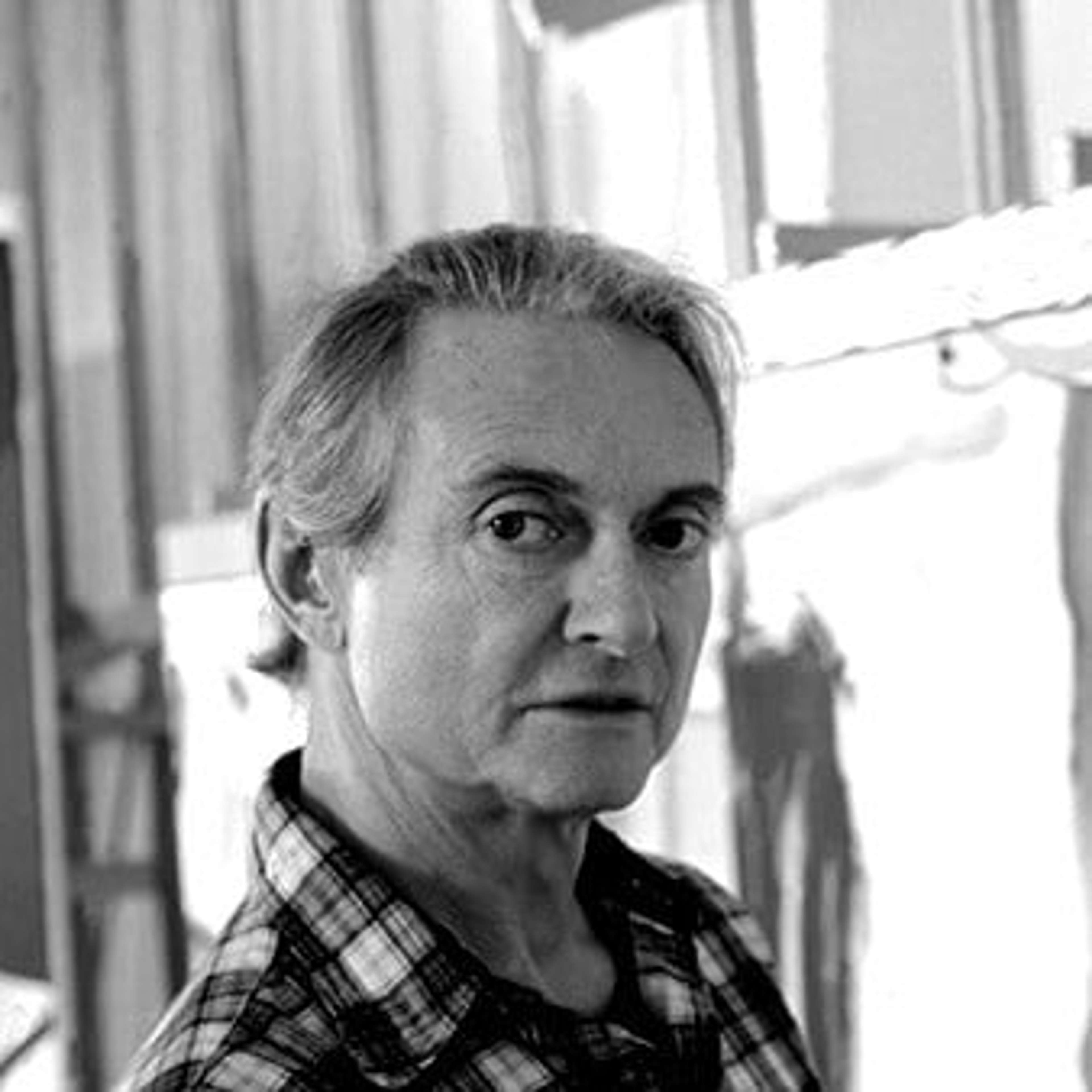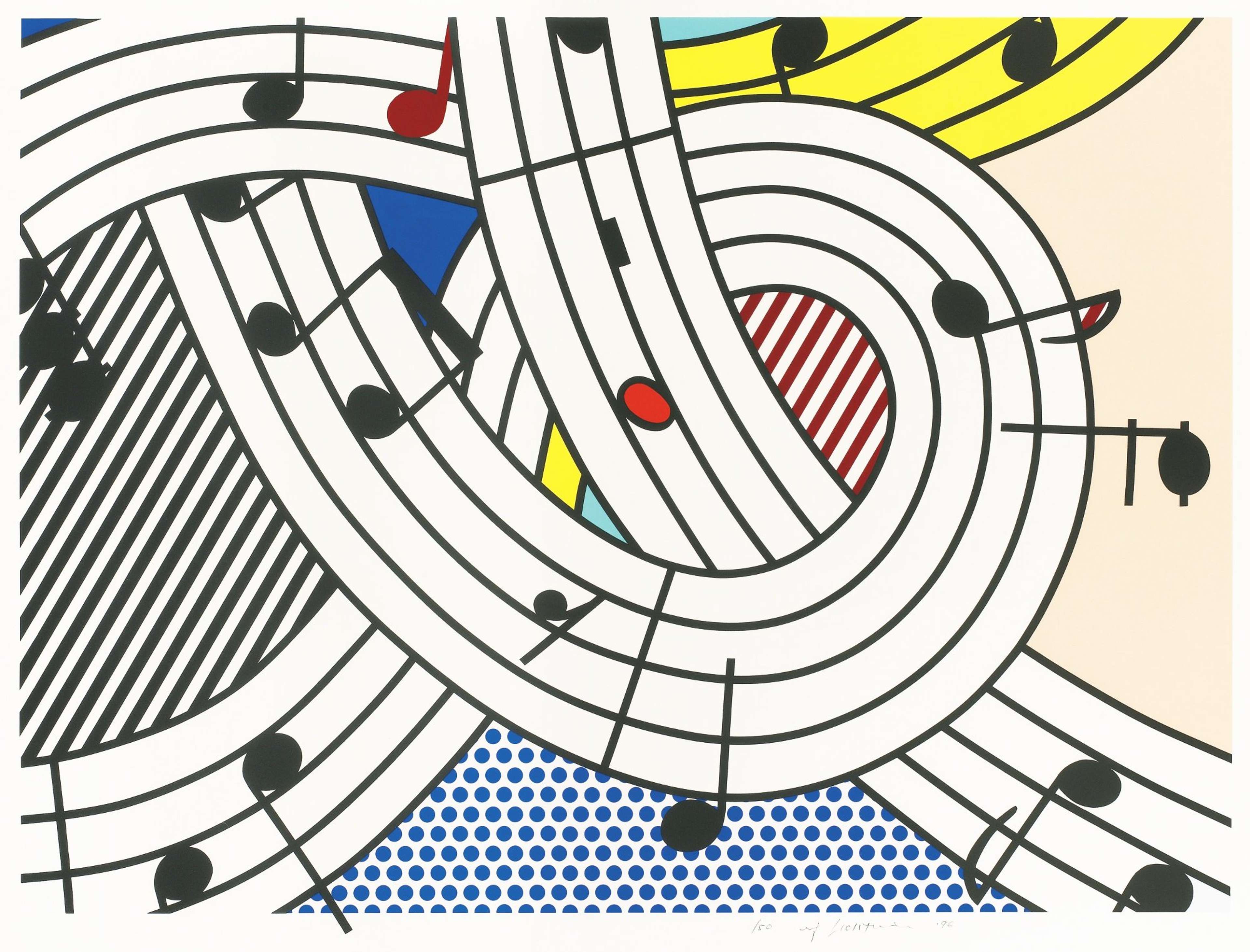


Roy Lichtenstein's Composition series reveals the artist's love of music and close affinity to jazz. Despite his immense success as a Pop Artist, Lichtenstein always longed to be a musician himself, making this series an homage to his greatest passions.
The series appropriates sheet music.
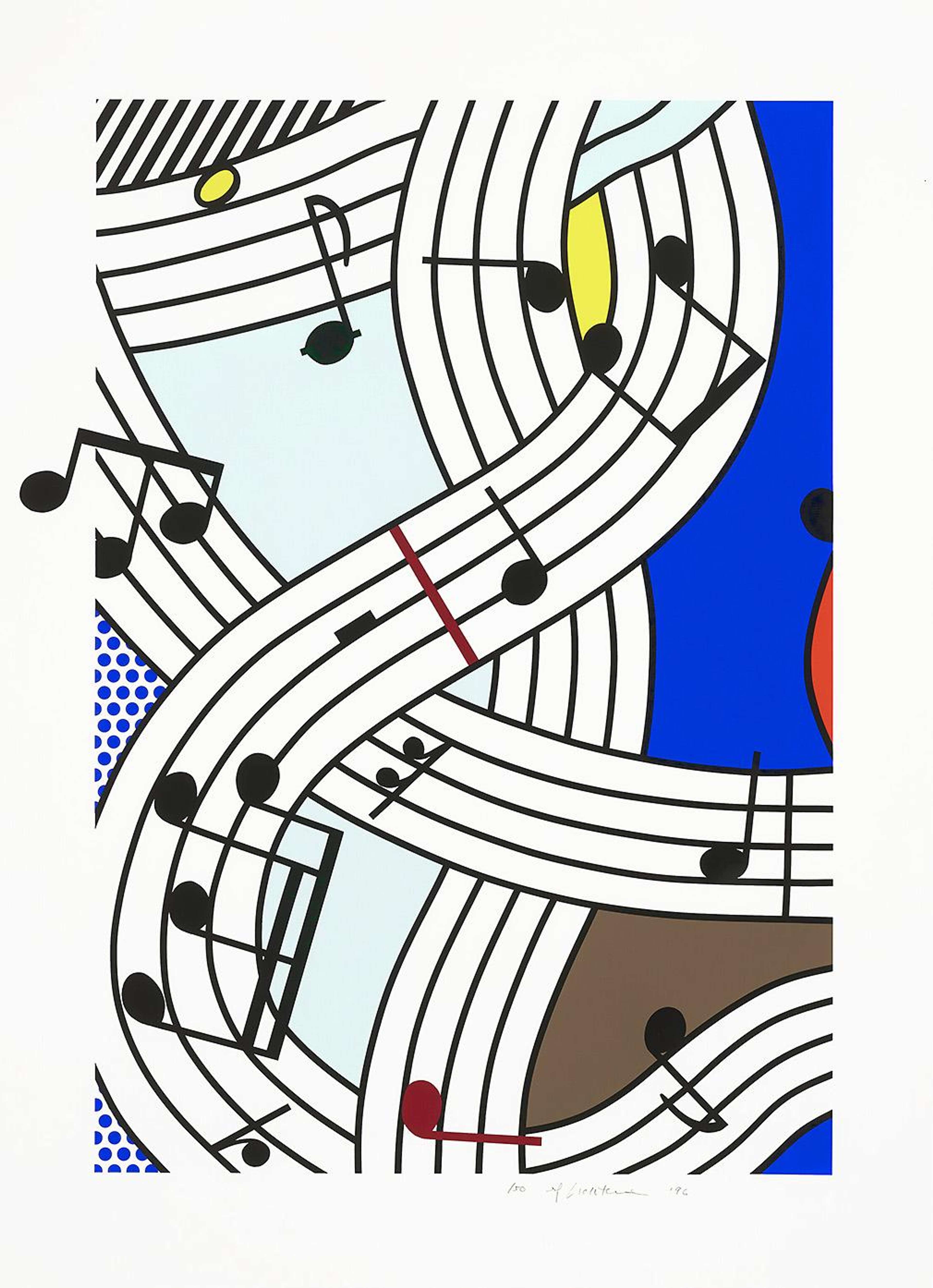
In his typically vibrant style, Lichtenstein transformed mundane sheets of music into dizzying and dancing compositions. The once linear staves of music are represented like twisting roads, layered over one another to give a sense of movement and liveliness.
Lichtenstein animated the music he represented.

With his application of punchy primary colours, Lichtenstein gives his sheet music an energetic appeal. Some of his music notes are represented outside the stave, as though dancing.
Lichtenstein was raised by a musical family.
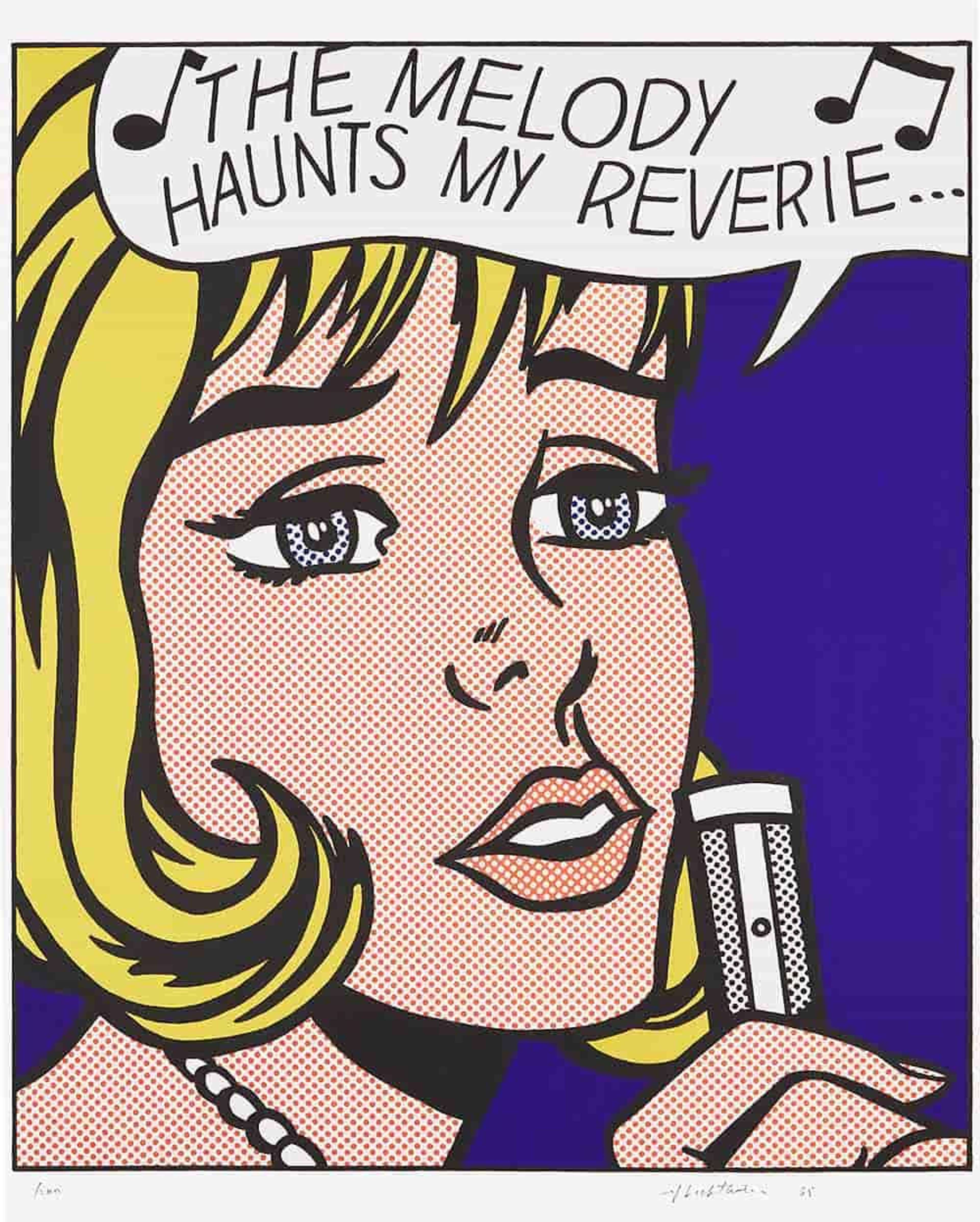
Lichtenstein was born into a musically talented family, which clearly inspired his passion for music throughout his life and artistic career. His mother, Beatrice Lichtenstein, was a talented piano player and likely informed Lichtenstein's own passion for music.
Sound is an integral part of Lichtenstein's oeuvre.

Since his early comic strip-inspired works, Lichtenstein has used onomatopoeia to enliven his works. While his sound-inspired works usually featured a suggestive word in bold, his Composition works demand the viewer's interpretation of his musical notes.
Lichtenstein was a lover of jazz music.
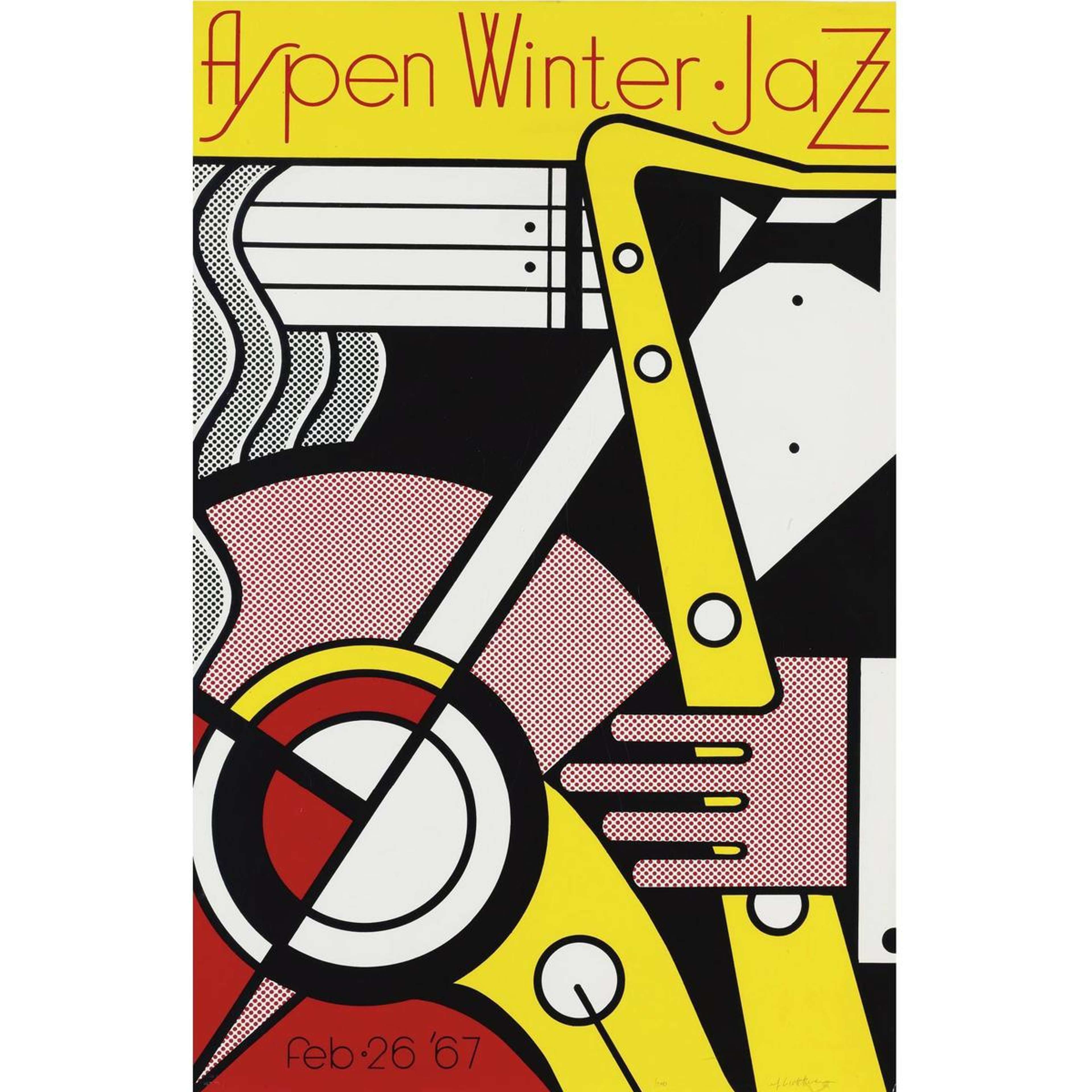
Born and raised in New York City, Lichtenstein grew up amidst the city's infamous Jazz Age. Lichtenstein himself played a variety of instruments, and frequented concerts at the Apollo Theatre in his teenage years.
Lichtenstein used music in his art to question distinctions between 'high' and 'low' arts.
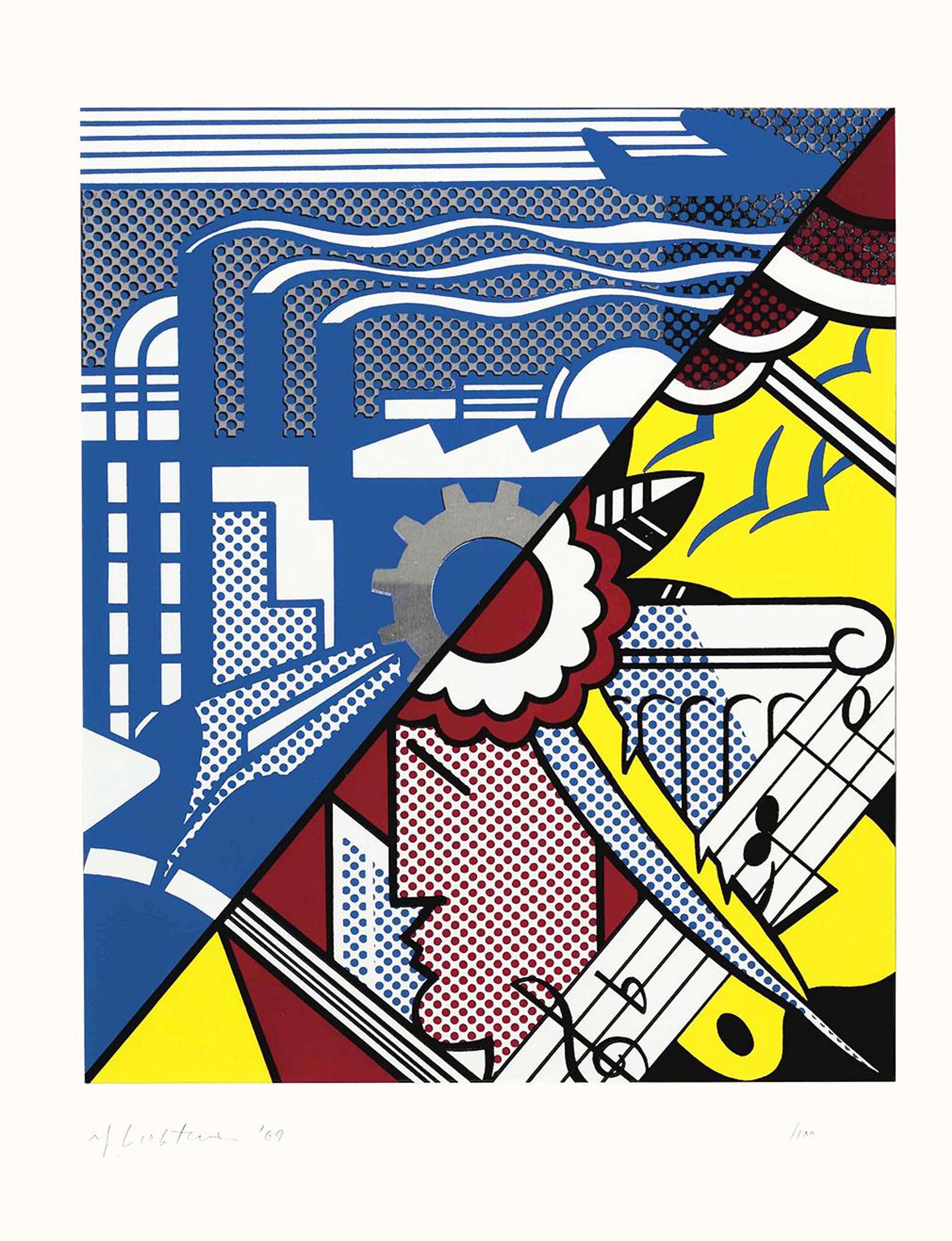
As a Pop Artist, Lichtenstein's approach to art making was often mechanical and industrial. The subject matter of his works, however, reveals his ongoing fascination with the arts and human creativity.
Lichtenstein wanted to be a musician.
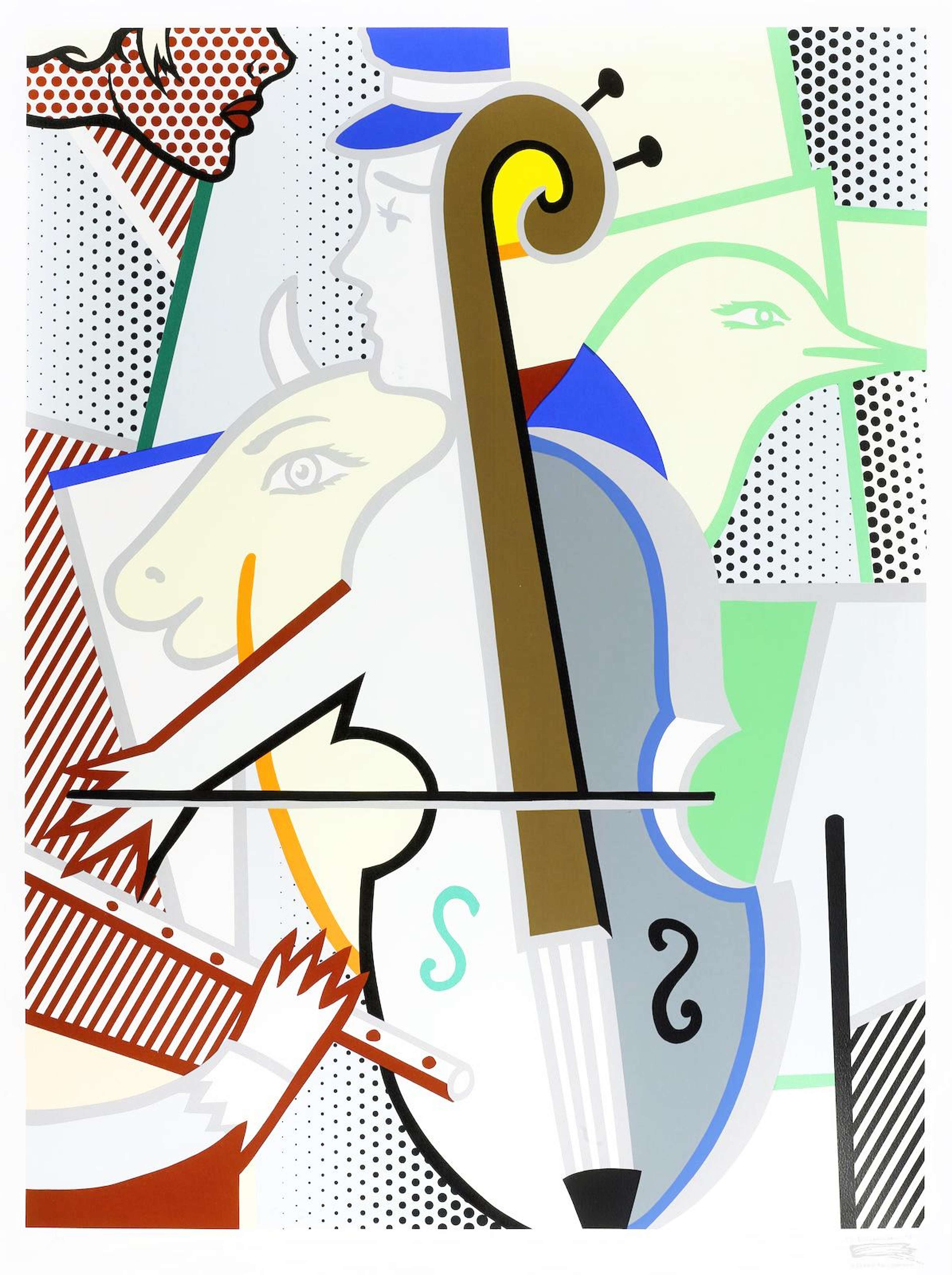
Lichtenstein was an artist with many passions, all of which informed his art practice. In a 1997 interview he said, "What I really want to do is music, but I won't give up my day job!" The Composition series is a testament to his deep-rooted passion for music, and a marriage of his two favourite expressions of creativity.
The Composition series speaks to the creative and free spirit of jazz.
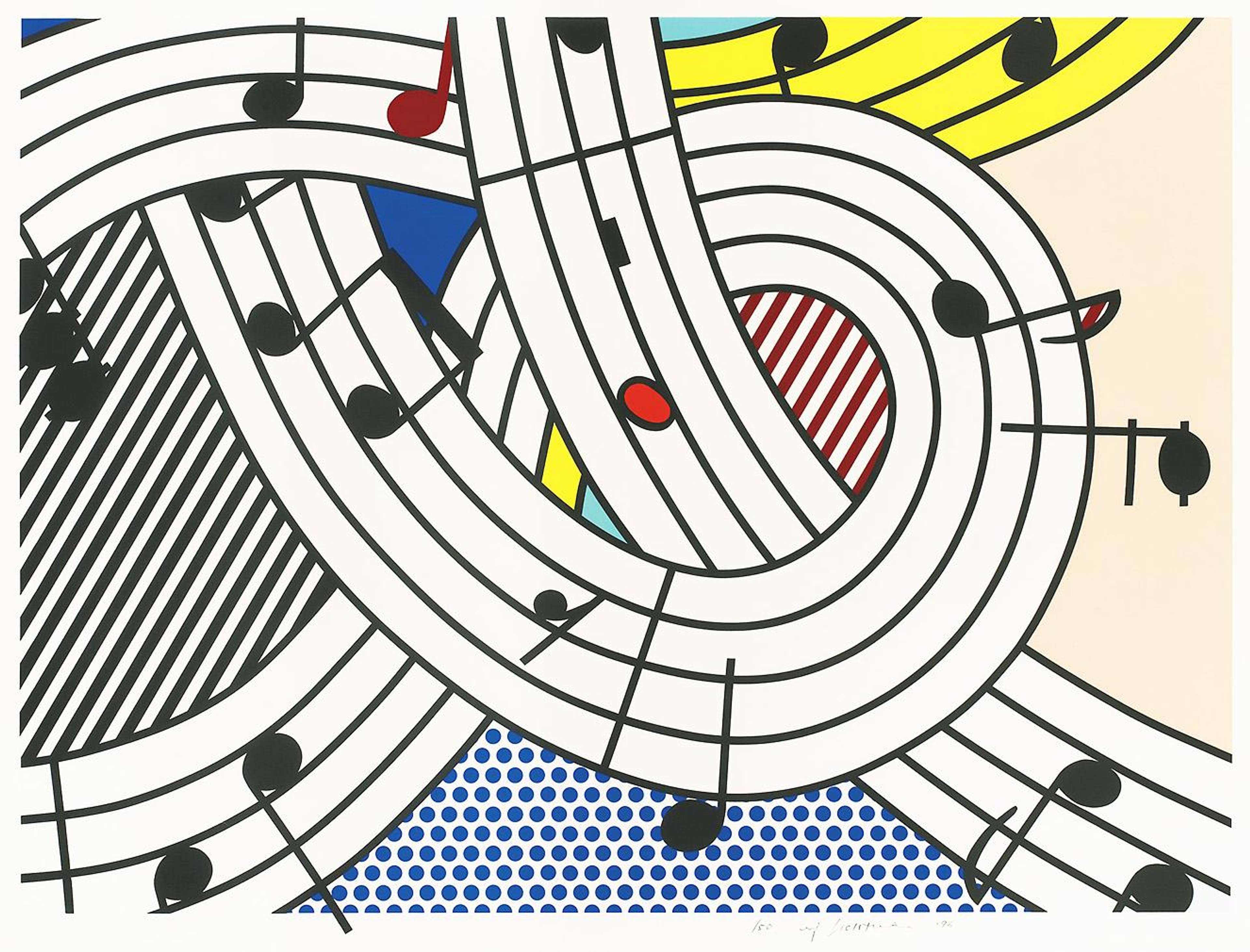
With the twists and turns of his staves, Lichtenstein's Composition works seem to mimic the syncopation and improvisation that characterises jazz music. Though the works might not represent a recognisable melody, they capture the lively genre that Lichtenstein favoured.
The title of the series is a pun.
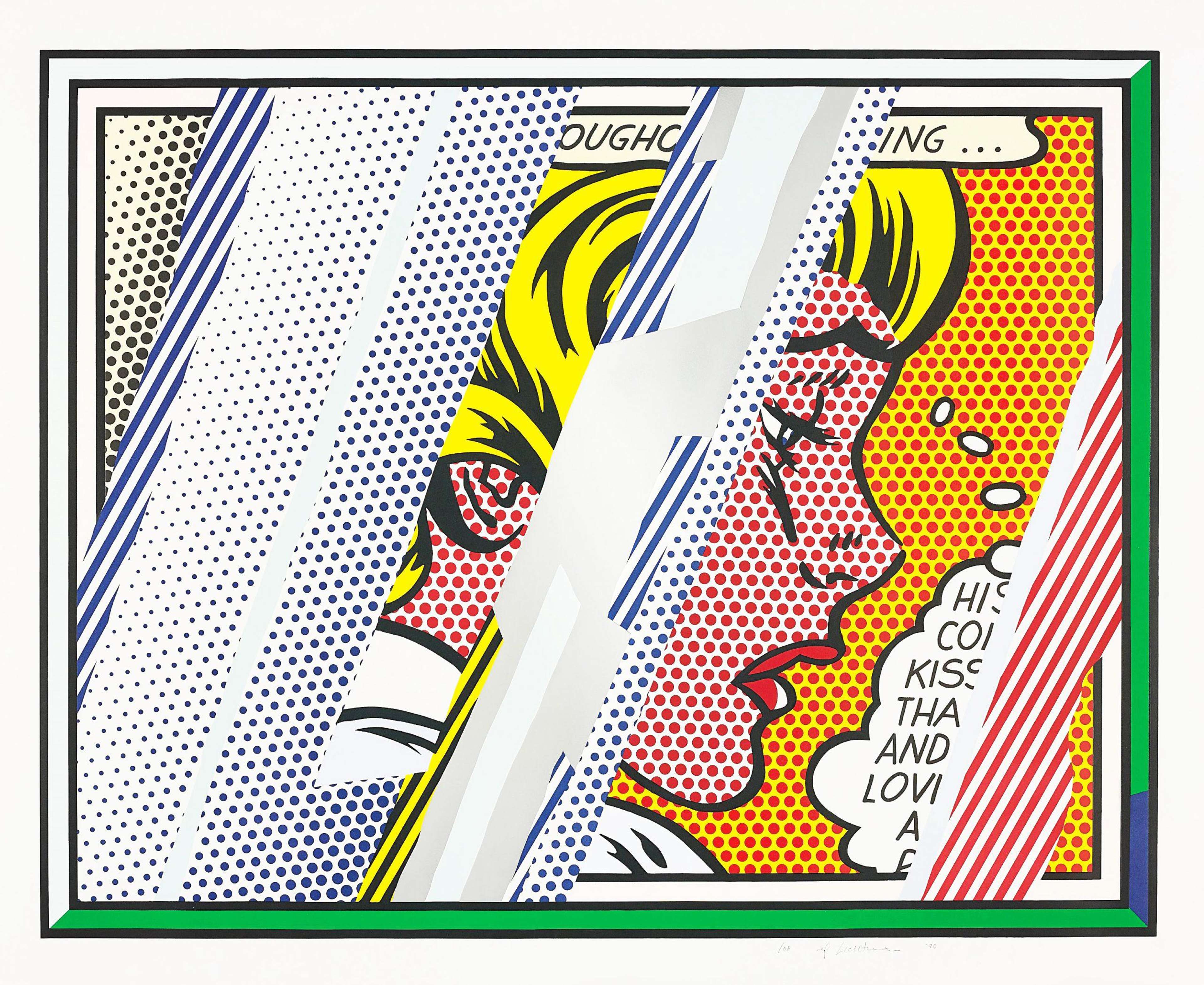
Typical of the witty humour that underscores his entire oeuvre, Lichtenstein humorously titled this series to reflect his subject matter. Indeed, each visual composition in the series represents a different musical composition, toying with the terminology used across the arts.
Music is elemental in Pop Art.

Pop Artists of the 1970s-80s, especially those living and working in NYC, were immersed in the vibrant cultural scene that they depicted in their work. For Lichtenstein's successors, the night life and music scene of the city informed their mass media-influenced artwork. From Warhol, to Basquiat, to Haring, music was a fundamental force in Pop.