
Key Takeaways
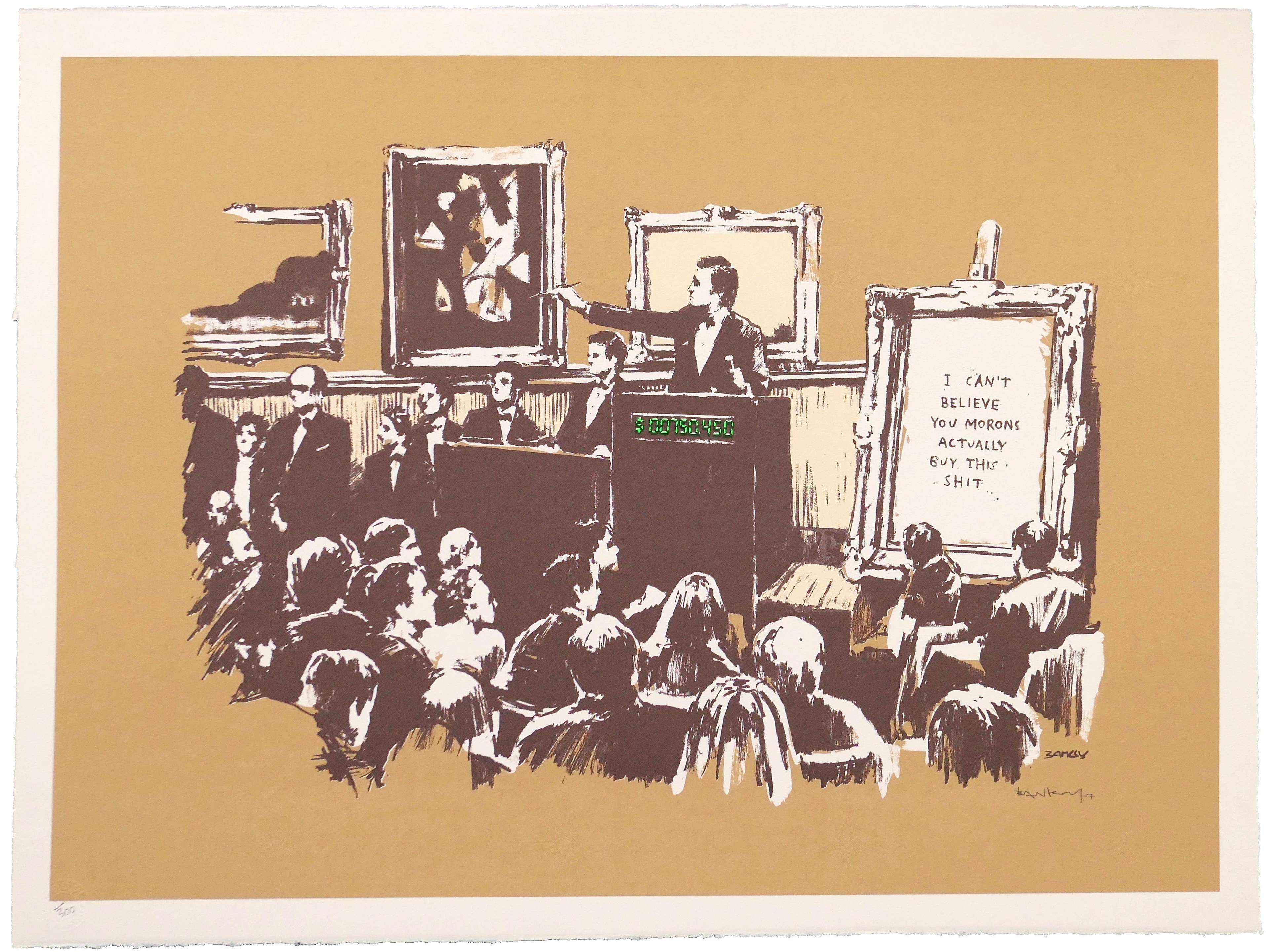
In February, Sotheby's expanded its highest buyer's premium tier so that the 28% rate now applies to hammer prices up to £1.5 million in London (previously £800,000) and $2 million in New York (previously $1 million). This is not a minor adjustment. Much of the active blue chip print market now falls within the highest premium band in the house's structure. For sellers in this segment, the gap between what a buyer pays and what the seller receives has never been wider.
For many prints and editions, particularly those trading within the mid-market, a private sale can often deliver a stronger net outcome than a public auction. The hammer price is only one part of the transaction. Understanding the difference means looking at how each sales channel shapes the final outcome for both buyer and seller.
The Auction Model: Pros and Cons
Auction House Pros
- Potential for record-breaking prices. For works with exceptional provenance and genuine rarity, a competitive salesroom can exceed private sale benchmarks.
- Global visibility. Major auction houses market works to an international audience through catalogues, exhibitions, and established bidding networks.
- Independent price discovery. Auction results create a public market benchmark that can be valuable for collectors, insurers, and future valuations.
Auction House Cons
- High seller fees. Vendor commission is commonly around 15% for standard consignments, although major collections and high-value works often attract negotiated terms.
- Unpredictable returns. There is no guaranteed sale price. If bidding is weak, the work may sell at or below reserve – or not at all.
- Reputational risk. An unsold result is publicly visible and can suppress future demand. A “burnt” work is genuinely harder to sell the second time.
- Buyer's premium inflates the total cost. Buyers now pay up to 28% on top of the hammer price, plus VAT on that premium. For a work hammering at £100,000, the buyer's total outlay is £128,000 before tax. That cost affects how much buyers are willing to bid in the first place.
- Timing is fixed. Consignment deadlines run two to three months ahead of a sale. Sellers work around the auction calendar, not their own.
- Saturation risk. You cannot control what else appears in the same sale. Your work may sit alongside a stronger or weaker example from the same series, affecting demand on the day.
- Unsold fees. If the work fails to sell, the auction house may charge a buy-in fee – typically 1.5% of the average estimate – plus storage until the work is collected.
The MyArtBroker Private Sale Model: Pros and Cons
Private Sale Pros
- 0% seller's fees. No marketing, catalogue, storage, or commission costs deducted from the agreed return.
- A guaranteed net return. Sellers know the amount they are aiming to receive before the work is marketed, without commission deductions reducing the final outcome.
- No public record of unsold results. Works are introduced privately to a qualified buyer base. There is no risk of a public burn.
- Sell when the market is right. No fixed calendar. Sellers choose the timing; specialists advise when demand is strongest.
- Direct access to a dedicated collector network. Works are marketed to 35,000 category-specific collectors – buyers actively looking for prints and editions, not a general art audience.
- Full transparency on pricing. MAB provides clear data on past auction results, current demand, and fair market value before any consignment is agreed.
Private Sale Cons
- No bidding war dynamic. A private sale does not replicate the competitive energy of a live auction, which can occasionally push prices above any private buyer's ceiling.
- Less suited to works where competitive bidding is likely to be exceptional. For certain unique works with outstanding provenance or broad institutional interest, the visibility and competitive dynamics of auction may produce stronger results than a private sale.
- Pricing is negotiated rather than discovered. Private sales rely on reaching an agreed value between buyer and seller, rather than allowing the market to establish a price through competitive bidding.
Why Auction Is A Risker Proposition For Prints
Auction is built around competition. For truly unique works with exceptional provenance, strong institutional interest, or once-in-a-generation rarity, the visibility of a public sale can create urgency that drives exceptional results. Rare print portfolios, complete sets, and highly sought-after editions can benefit from these same dynamics when supply is genuinely limited.
Most editions, however, behave differently. Because multiple impressions exist, buyers know another example is likely to come to market. That changes bidding behaviour. Rather than competing at any cost, collectors are often more disciplined, making purchasing decisions around fair market value rather than fear of missing a unique opportunity.
As a result, sellers of prints and editions face a different set of risks. A work may compete directly with comparable impressions in the same sale, buyer demand can become diluted if supply is concentrated, and public auction results immediately become reference points for future transactions. Timing therefore becomes just as important as the quality of the work itself.
Private sales offer greater flexibility. Sellers can choose when to bring a work to market, avoid competing with similar impressions, and target qualified buyers without the pressure of a fixed auction calendar. For editions, where buyers routinely compare condition, provenance, and recent sales data, that flexibility can be just as valuable as public exposure.
Is It Better To Sell Art At Auction Or Privately?
There is no universal answer – it depends on the work.
Auction remains the strongest route for many unique works and exceptionally rare editions, where competitive bidding can outweigh the additional costs. For many prints and editions, however, sellers should look beyond the headline hammer price and compare the total outcome. Commission, buyer’s premium, timing, competing supply, and the risk of an unsold result all influence what a seller ultimately receives.
How Auction Fees Actually Work In 2026
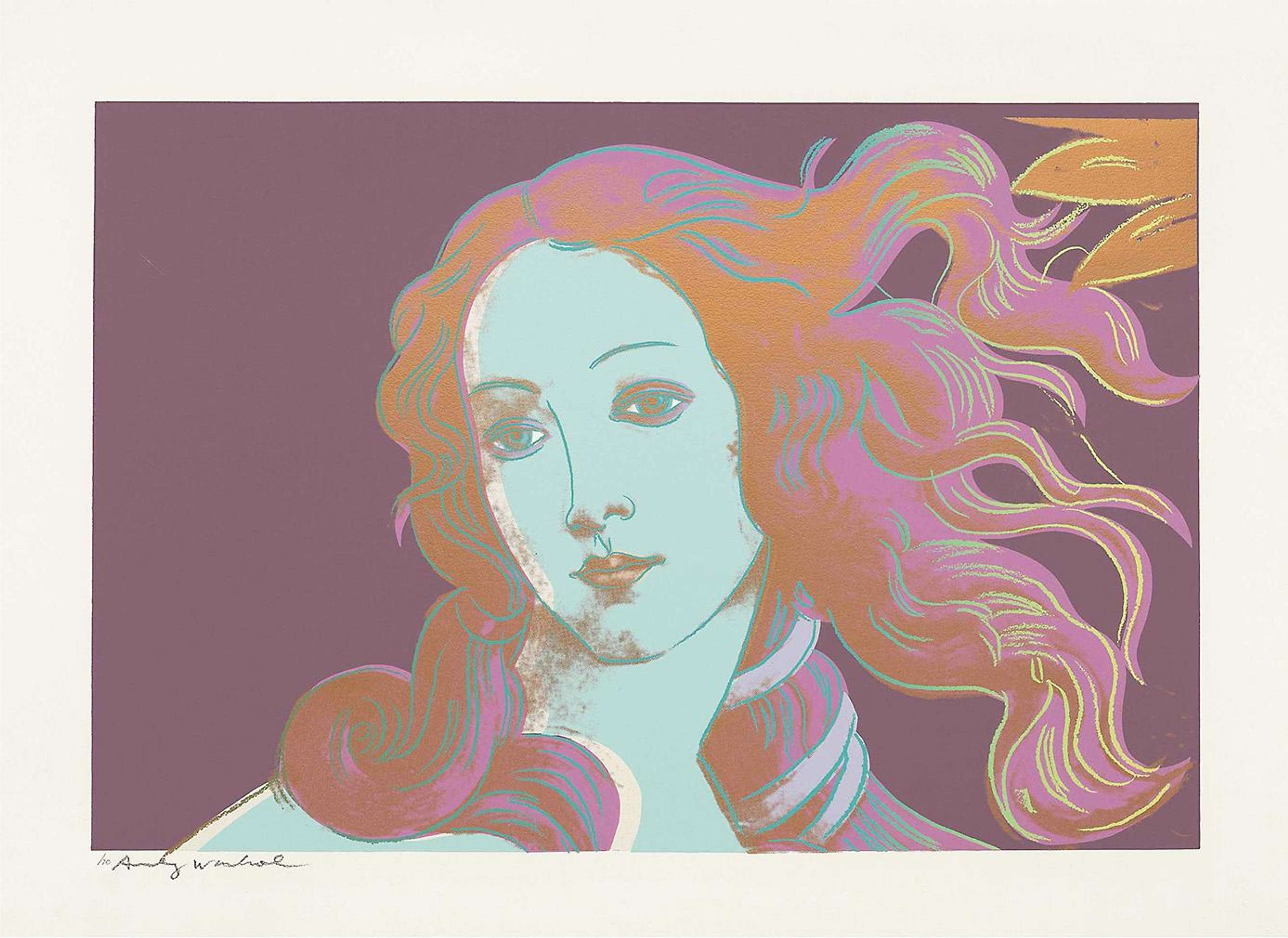
Auction houses take a commission from both sides of the transaction.
From the seller: typically 15% of the hammer price, plus potential fees for marketing, LDL (loss, damage and liability insurance), and cataloguing. For major consignments, these can often be negotiated down or waived. The exact terms vary depending on the value, rarity, and desirability of the work, with stronger consignments often attracting more favourable arrangements.
From the buyer: a tiered buyer's premium. Following Sotheby's February 2026 revision:
- 28% on hammer prices up to £1.5m (London) / $2m (New York)
- 22% on hammer prices between £1.5m and £6m
- 15% above that threshold
VAT is charged on the premium, adding a further layer of cost. While fee structures differ between auction houses, Sotheby’s currently applies the highest first-tier threshold among the major international houses, with Christie’s and Phillips operating different premium structures and thresholds.
What this looks like in practice:
| Hammer Price | Buyer Pays (28% BP) | Seller Receives (after 15% comission) | Transaction Cost |
|---|---|---|---|
| £50,000 | £64,000 | £42,500 | £21,500 |
| £100,000 | £128,000 | £85,000 | £43,000 |
| £200,000 | £256,000 | £256,000 | £86,000 |
| £500,000 | £640,000 | £640,000 | £215,000 |
The gap between what the buyer pays and what the seller receives is not a rounding error. On a £200,000 hammer result, it is £86,000 – going to the house.
Christie's last adjusted its rates in September 2025 and has stated no plans to change again. Phillips introduced an early-bird incentive in 2025, offering a reduced buyer's premium to bidders who submit a binding bid at or above the low estimate at least 48 hours before the sale. None of these structures benefit print sellers in the mid-market in any material way.
Why Private Doesn’t Mean Selling For Less
One of the biggest misconceptions about private sales is that they require accepting a lower price than auction.
In reality, buyers decide what they are willing to spend overall, not just what they are willing to bid. At auction, a significant proportion of that budget is absorbed by buyer’s premium, VAT on the premium, and other transaction costs.
A private sale changes that equation.
Without the additional layers of auction fees, more of the buyer’s budget can be directed towards the artwork itself rather than transaction costs. That creates greater flexibility for both parties. Buyers can often acquire a work for less than they would spend at auction, while sellers can achieve an equivalent – or even stronger – net return because fewer deductions are made from the transaction.
For prints and editions, where comparable works regularly come back to market and buyers are typically well informed about recent pricing, this difference is particularly significant. The objective is not to achieve the highest hammer price; it is to maximise the seller’s net proceeds while keeping the overall acquisition cost attractive to buyers.
This helps explain why private sales have become an increasingly attractive route for many high-value edition transactions. The conversation is no longer simply about where a work sells. It is about which route creates the strongest outcome for both buyer and seller.
The Sotheby's 2026 Change: What Actually Shifted
Sotheby's New Fee Structure – 2026 Update
The headline – 27% becoming 28% – understates what changed in February. The more consequential move was the expansion of the tier ceiling.
Previously, a work hammering at £1 million in London would step into the 22% mid-tier. Under the 2026 structure, that same work sits inside the 28% bracket. A full range of mid-to-high-value transactions – the segment where most serious print market activity takes place – has been pushed into the most expensive band.
This follows a period of experimentation. In 2024, Sotheby's briefly trialled a simplified flat structure – a 20% buyer's premium up to $6m and 10% above – alongside a standardised seller's commission. The goal was transparency and volume. In practice, major consignors migrated toward houses and platforms where they could negotiate better terms. By the end of 2024, Sotheby's reversed course.
The 2026 structure builds on that reversal. It is more revenue-secure for the house and more expensive for much of the mid-market than previous iterations. Christie’s has retained the buyer’s premium structure introduced in September 2025, while Phillips revised its own fee schedule in April 2026, meaning collectors now encounter materially different acquisition costs depending on where a work is offered. Understanding those differences has become an increasingly important part of choosing the most effective route to market.
Sotheby’s, Christie’s and Phillips all publish their current buyer’s premium schedules on their websites.
Selling Privately Through MyArtBroker: How It Works
Selling privately is designed to provide clarity from the outset. Sellers agree a pricing strategy with a specialist before a work is introduced to buyers, with no seller’s commission deducted from the final return.
What Sellers Can Expect
1. Receive a complimentary valuation
Every sale begins with a specialist valuation, drawing on auction results, private market intelligence, condition, provenance, and current collector demand.
2. Agree a pricing strategy
A dedicated specialist – many with auction house experience – works with the seller to establish a fair market value and recommend the most effective route to market.
3. Match the work with qualified collectors
Rather than waiting for a fixed auction date, works are introduced privately to MyArtBroker’s network of over 35,000 collectors actively buying prints and editions. There are no catalogue deadlines and no public record if a sale is not completed immediately.
4. Complete the transaction
Once a buyer is secured and payment has cleared, MyArtBroker manages logistics through trusted conservators and fine art shippers. The current average time to sale is approximately 60 days, with a 93% sell-through rate.
Why 0% Seller’s Fees Are Possible
The difference is structural rather than promotional. Traditional auction houses operate across multiple collecting categories, global salerooms, seasonal sales, printed catalogues, and significant fixed overhead. MyArtBroker specialises exclusively in prints and editions, operating a digital-first brokerage model that connects buyers and sellers directly.
That focus allows resources to be invested where they create the greatest value for collectors: specialist expertise, pricing intelligence, and access to an active global buyer network, rather than the infrastructure required to stage public auctions.
Should You Sell Your Print Online?
The shift towards online platforms has transformed the way collectors buy and sell prints. While online art sales have recalibrated from their pandemic peak, the Art Basel & UBS Art Market Report 2026 found that 63% of online auction value is concentrated in works below $50,000 – the price bracket where prints and editions trade most actively. For this segment of the market, online has become an established sales channel rather than an alternative to traditional auction houses. Digital access, however, does not replace specialist knowledge, particularly around condition, provenance, timing, and pricing strategy.
Works sold through unverified or general marketplaces can be routinely undervalued, misrepresented, or delayed by authentication disputes. The prints and editions market has its own conventions – from Banksy’s Pest Control authentication and the distinction between signed and unsigned editions to proof types, edition numbering, publisher stamps, and complete sets in artists such as Warhol, Haring, and Lichtenstein. Understanding these nuances is essential to achieving an accurate valuation and identifying the right buyer.
A recognised specialist adds accountability, pricing accuracy, and direct access to buyers who are actively looking. For sellers seeking a specific collector rather than a public auction result, that combination is difficult to replicate through general online channels.
Whether you ultimately choose auction or private sale, the most important first step is understanding fair market value. A specialist valuation provides the context needed to compare routes to market, assess timing, and determine which strategy is most likely to maximise your return.