
Key Takeaways
How to Sell a Keith Haring Print Step-By-Step
- Confirm edition size, signature type, and publisher against the catalogue raisonné
- Identify whether your work sits in a liquidity tier (Pop Shop) or scarcity tier (low-edition portfolios / sculptural works)
- Assess whether your print forms part of a complete set – separation materially affects pricing
- Review condition carefully – colour preservation and margins are critical
- Align route to market with rarity and demand depth
Alongside this, rarer portfolios, special proofs, sculptural editions, and select Untitled prints – where value is often tied to year of creation – operate in a tighter scarcity tier. Understanding where your work sits within that structure is central to achieving the strongest result.
Is Now a Good Time To Sell A Keith Haring Print?
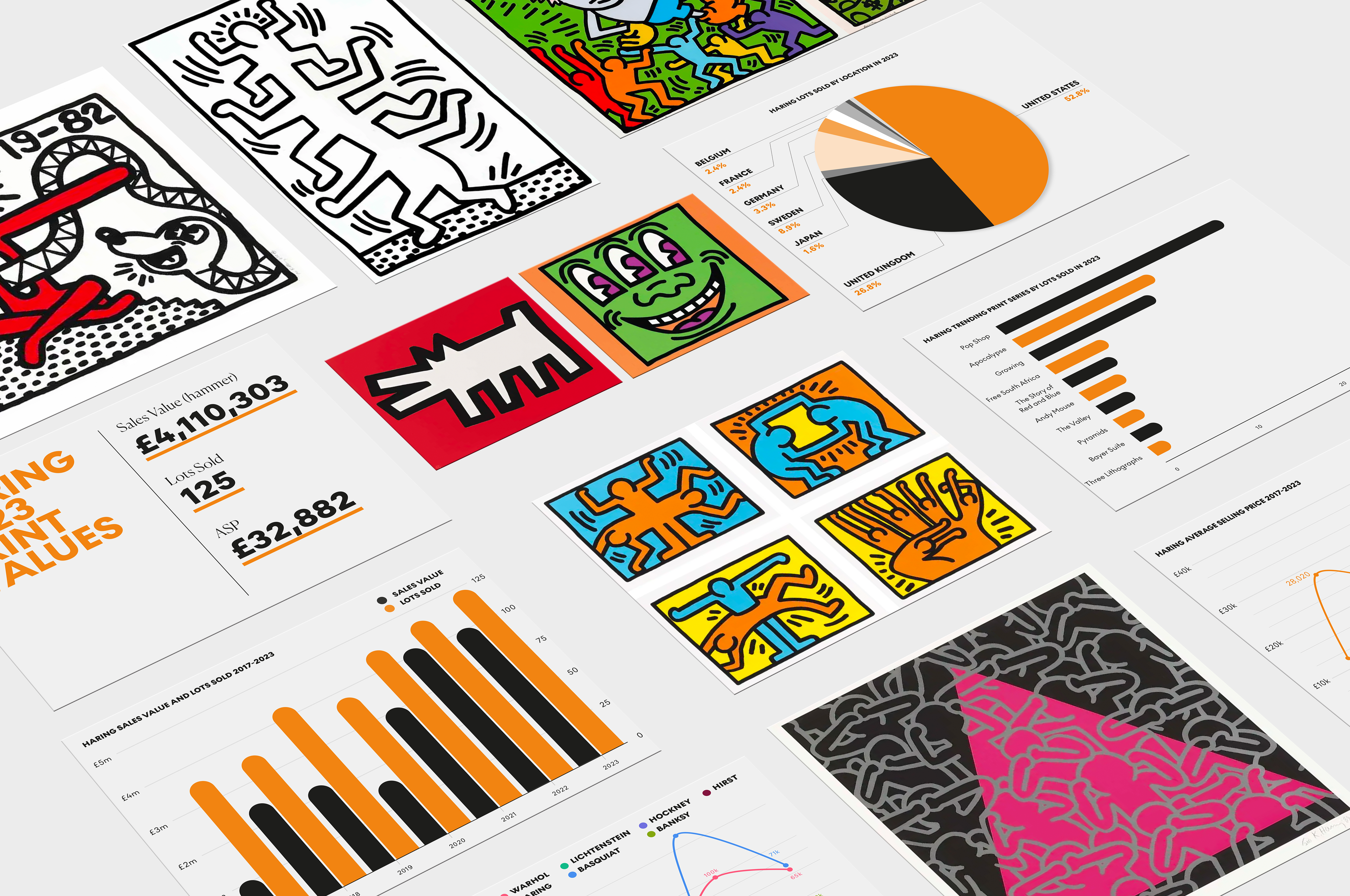
Haring's print market has become increasingly selective over the past five years. Total auction sales value peaked in 2022–23 before cooling through 2024–25 as buyers became more discerning. More recently, the market has strengthened through higher average prices rather than increased trading volume. Lot numbers have remained broadly consistent year to year, while the average price achieved per work has continued to rise, reflecting stronger demand for the best examples.
The current market is also notable for the range of works coming to auction. Complete portfolios, trial and artist’s proofs, sculptural Dog editions, ceramics, tapestries and lower-edition prints have all appeared alongside more regularly traded works. This breadth demonstrates a healthy and active market, but performance remains increasingly selective. Buyers are rewarding rarity, condition and provenance rather than bidding up supply across the board. For sellers, understanding where a work sits within this hierarchy has become more important than simply choosing when to sell.
Keith Haring Market Performance – What Is Driving Value in the Haring Market?
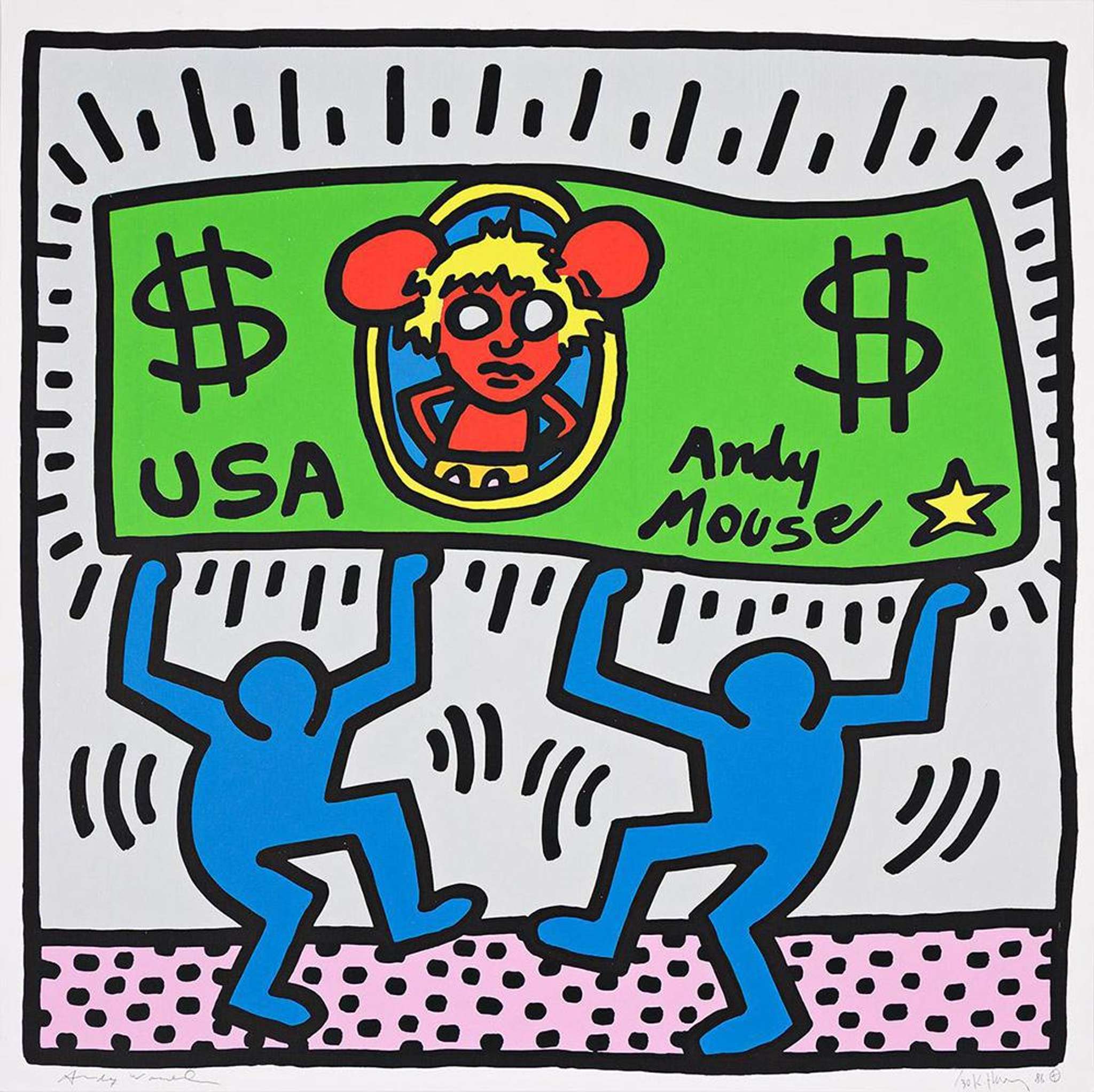
The strongest results in 2025 were achieved by the lowest edition works. Sculptural Dog editions – produced in editions of approximately 10–15 per colour, particularly special proofs – have occupied the upper tier when they appear. The Growing portfolio (edition of 100), especially sets with matching edition numbers and trial proofs, has also performed strongly in the recent market. Andy Mouse prints, issued in editions of 30 and bearing dual Haring–Warhol signatures, remain tightly supplied and competitively positioned when they surface.
Thematic works, like Silence Equals Death, and works belonging to the Fertility Suite and Flowers portfolio also maintain consistent engagement due to their direct connection to Haring’s activism and cultural legacy. While not always the highest priced, they sustain visibility and buyer interest across cycles.
The Pop Shop series provides the market’s liquidity base. These works trade consistently across formats – individual prints, quads, complete sets, and estate-signed impressions – supporting depth and transactional flow rather than scarcity-driven spikes. Discover the confidence scoring of Haring's most investable works in our Collections Report 2026.
How Much Is My Keith Haring Print Worth?
Pricing in Haring’s market depends on where a specific work sits within its edition structure and supply cycle.
Low-edition works operate in a scarcity-driven tier. Complete sets are relatively rare across Haring’s market, and when they do appear, competition can be concentrated. Scarce individual prints can also rival complete portfolios at the top of the market, particularly exceptional examples from sought-after series such as Andy Mouse.
Individual works can also achieve strong results, particularly lower-edition Untitled prints where value is often tied closely to year of creation. Early works aligned with key moments in Haring’s practice tend to anchor pricing more firmly than later material.
Larger-edition portfolios and Pop Shop works trade within more defined ranges. These works benefit from transparent comparables, but performance is shaped by timing, condition, and configuration rather than rarity alone.
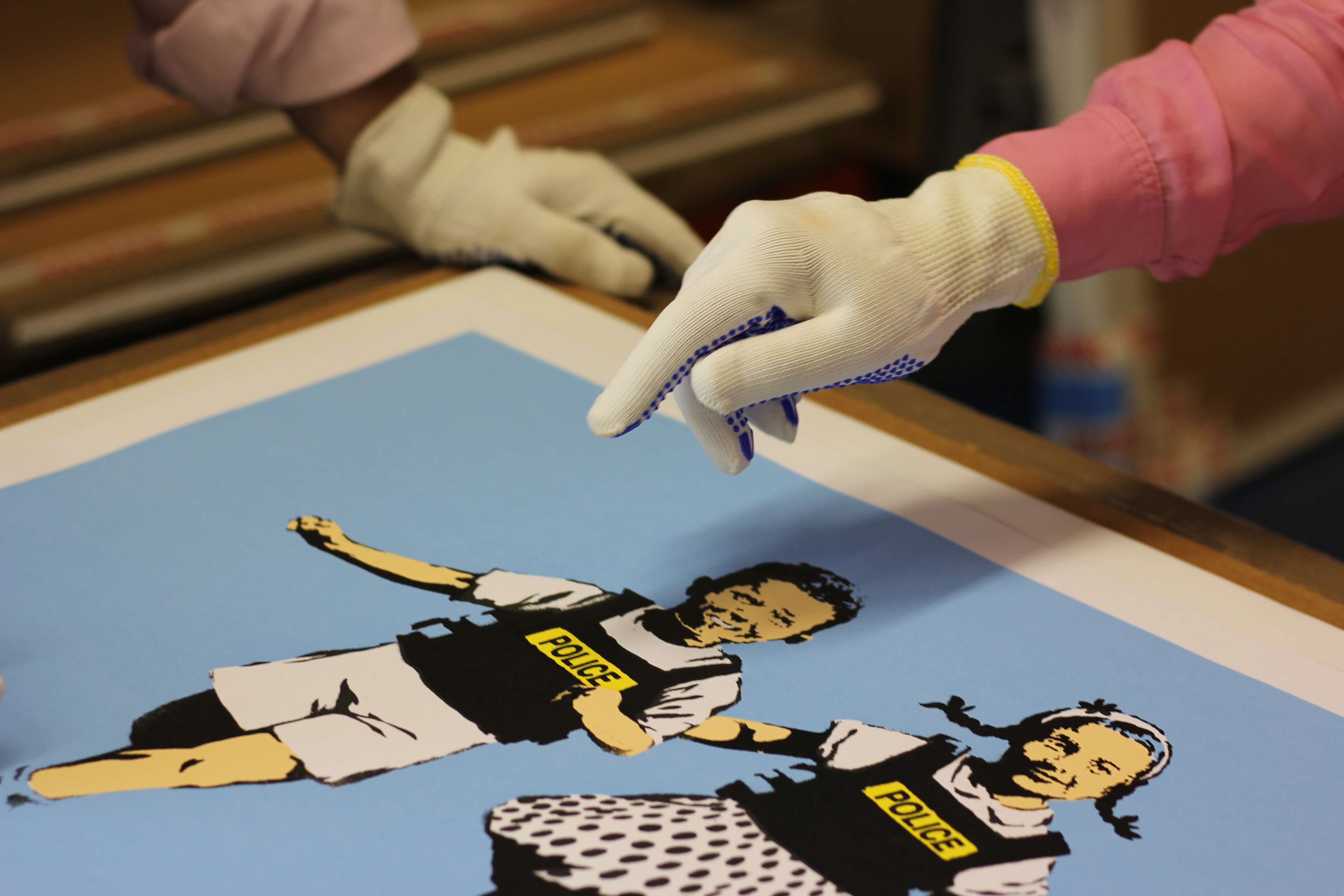
Condition remains highly visible across all works. Haring’s flat colour fields and sharp linework make fading, surface marks, or margin alterations immediately apparent on resale.
Value in Haring’s market is tiered rather than uniform. Correctly positioning a work within its edition group, configuration, and current supply cycle determines pricing strength more than subject alone.
How to Prove Your Keith Haring Print Is Real Before Selling
Authentication in Keith Haring’s market rests on documentation, publication history, and catalogue confirmation rather than foundation-issued certificates.
Keith Haring Foundation Authentication
The Keith Haring Foundation no longer provides authentication services. Its role is focused on preservation, scholarship, and legacy management. As a result, sellers must rely on recognised reference material and verifiable provenance when preparing a work for market.
Keith Haring Catalogue Raisonné and Provenance Documentation
The primary reference for editioned works remains Keith Haring: Editions on Paper 1982–1990 by Klaus Littmann, the catalogue raisonné covering Haring’s authorised print output. Confirming edition number, size, publisher, and signature format against this publication is essential before resale. Any discrepancies in numbering, signature placement, or paper type can materially affect market confidence.
Forgery remains an ongoing issue in Haring’s market. His continuous line technique and bold iconography have been widely imitated, and falsely signed impressions do circulate. Because the visual language appears deceptively simple, clean linework alone does not establish authenticity. Discrepancies in numbering, paper type, ink saturation, or signature format can materially affect value.
Documentation from recognised publishers and galleries – including Tony Shafrazi, Leo Castelli, and Michael Kohn – significantly strengthens positioning before sale.
Establishing catalogue alignment and provenance clarity before entering the market reduces friction during due diligence and protects pricing integrity.
How to Conserve Your Keith Haring Print to Retain Value
Haring’s prints are visually unforgiving. His saturated, flat colour blocks and continuous black linework make fading, abrasion, and surface disruption immediately apparent. Even minor light damage can dull reds, yellows, and blues, materially affecting resale appeal.
UV-protective glazing and avoidance of direct sunlight are essential. Unlike more textural printmakers, Haring’s works offer little visual forgiveness – colour loss is immediately visible to buyers.
Full margins are critical. Trimming to fit a frame significantly reduces value, particularly where signature, numbering, or publisher details sit close to the edge.
Many Haring prints were produced on wove papers that can show foxing, staining, or acid burn over time. Early framing materials are a common issue, and adhesive residue or backing board staining on the reverse can materially affect desirability.
Restoration should only be undertaken with professional advice and full documentation. Over-cleaning, aggressive flattening, or undocumented repair can reduce market confidence more than minor age-related wear.
Well-preserved colour, intact margins, and a clean reverse remain the strongest signals of care in Haring’s market.
Where Can I Sell My Keith Haring Print?
Route to market should reflect edition structure and supply level.
Auction vs Private Sale: Risk, Liquidity, and Control
Pop Shop works, particularly signed impressions and complete sets, can perform reliably at auction when estimates align with recent comparables. Their trading frequency provides transparency and competitive bidding when well-positioned.
Lower-edition portfolios, sculptural Dog editions, trial proofs, and tightly supplied works often benefit from controlled private placement. Public estimates can anchor pricing unnecessarily, and unsold lots become part of permanent record. Private transactions allow for targeted introduction without exposing the work to auction volatility.
Gallery placement offers discretion but typically involves longer timelines and less visibility around pricing comparables.
Selecting the appropriate channel is less about exposure and more about structural fit.
Why Sell Your Keith Haring Print with MyArtBroker
Specialist-Led Valuation
Each work is assessed individually against live market comparables, edition configuration, and current supply conditions. Pricing reflects structural positioning rather than headline results.
0% Seller’s Fees
Our private sale model eliminates seller commission and avoids public estimate anchoring. Net outcome remains the central focus.
Targeted Global Network
With access to over 30,000 active collectors, works are introduced directly to relevant demand rather than broadcast broadly. Placement is structured, not speculative.
Advisory and Strategic Placement
Where a print is better suited to auction or gallery placement, guidance is provided based on market positioning and rarity. Route to market is determined by structural advantage, not fixed channel preference.