

Key Takeaways
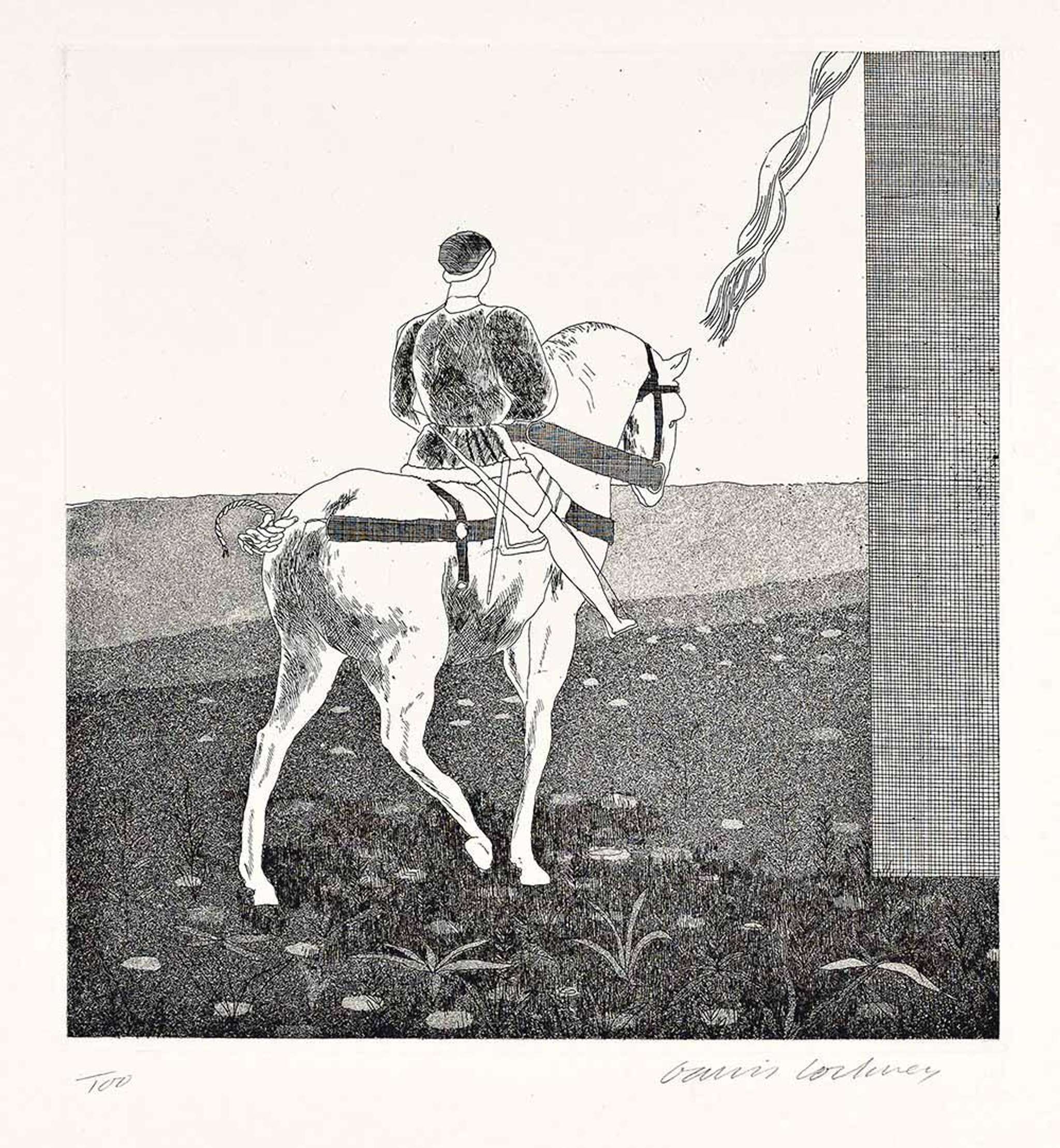
David Hockney’s Six Fairy Tales From The Brothers Grimm, created in 1969, is a series of etchings that reimagines six classic tales through a modern, minimalist lens. Known for his stark, linear style and imaginative use of space, Hockney's work captures the eerie and surreal atmosphere of the Grimm Brothers' stories.
David Hockney's Six Fairy Tales From The Brothers Grimm is a series created in 1969 that brings to life the dark and mysterious world of the Grimm Brothers' tales. Hockney chose six stories and interpreted them through a modern, minimalist lens, his etchings characterised by their stark, linear style and imaginative use of space, which often captures the eerie, surreal atmosphere of these traditional stories.
Hockney illustrated six Brothers Grimm fairy tales

The tales Hockney decided to illustrate include ‘The Little Sea Hare’, ‘Fundevogel’, ‘Rapunzel’, ‘The Boy Who Left Home to Learn Fear’, ‘Old Rinkrank’ and ‘Rumpelstilzchen’ In Hockney’s own words, these stories particularly compelled him:“They’re fascinating, the little stories, told in a very very simple, direct, straightforward language and style, it was this simplicity that attracted me. They cover quite a strange range of experience, from the magical to the moral.”
Hockney's illustrations defy traditional fairy tale visuals
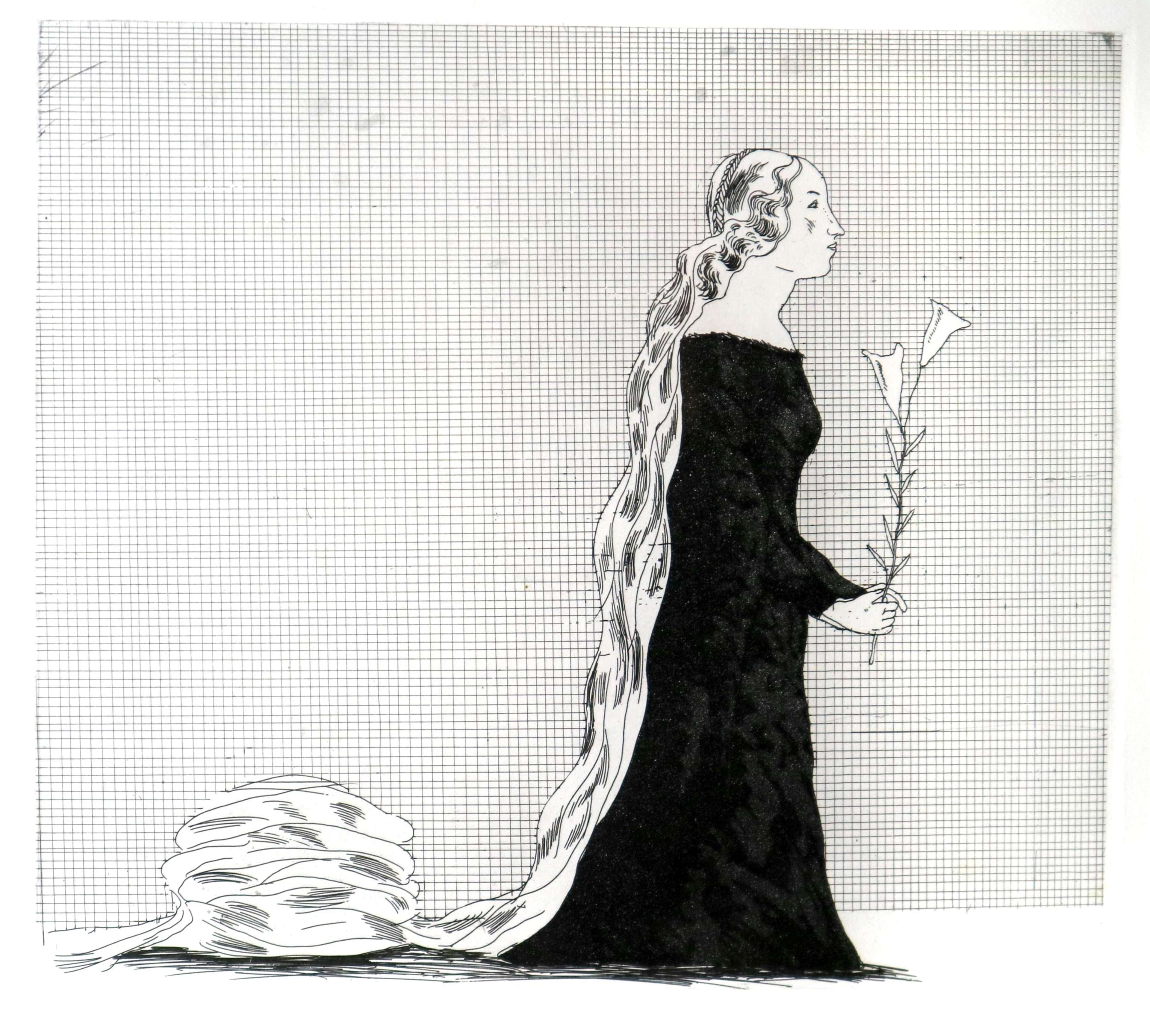
By using stark, monochrome imagery, Hockney’s depictions of The Brothers Grimm tales contrast with the traditional employment of beauty and colour, used in fairy tales to emphasise good and evil. The prominence of negative space, and portrayal of traditional characters as plain and unassuming, invites the viewer’s imagination and interpretations to roam freely.
The series, created in 1969, marked a departure from Hockney's painting style at the time
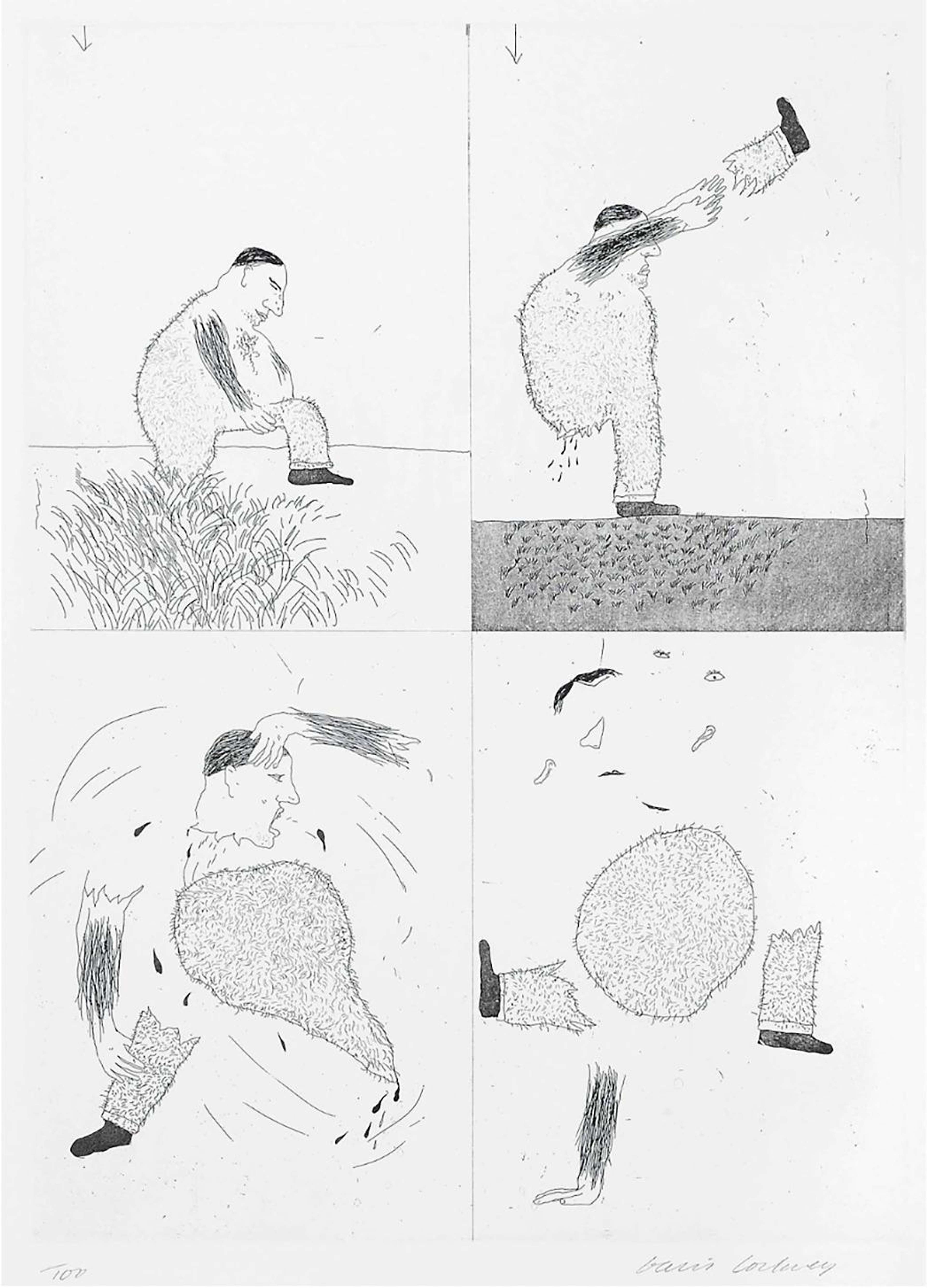
Hockney’s style prior to his Six Fairy Tales From The Brothers Grimm was characterised by an almost photographic naturalism, seen in pieces such as Peter Getting Out Of Nick’s Pool (1966), with the fairy tale subject allowing him to explore a more playful, abstract style.
Hockney used a soft-ground etching technique to create his pieces

Soft-ground etching involves placing paper over a wax-coated plate and drawing on the paper with a pen or pencil; where the paper presses into the wax, the wax sticks to the underside of the paper. This technique meant Hockney could make marks as if he were merely drawing on paper, showcasing his excellent draughtsmanship and creating illustrations that suited the fairy tale subject matter.
Hockney used aquatint to achieve a variety of tonal shading
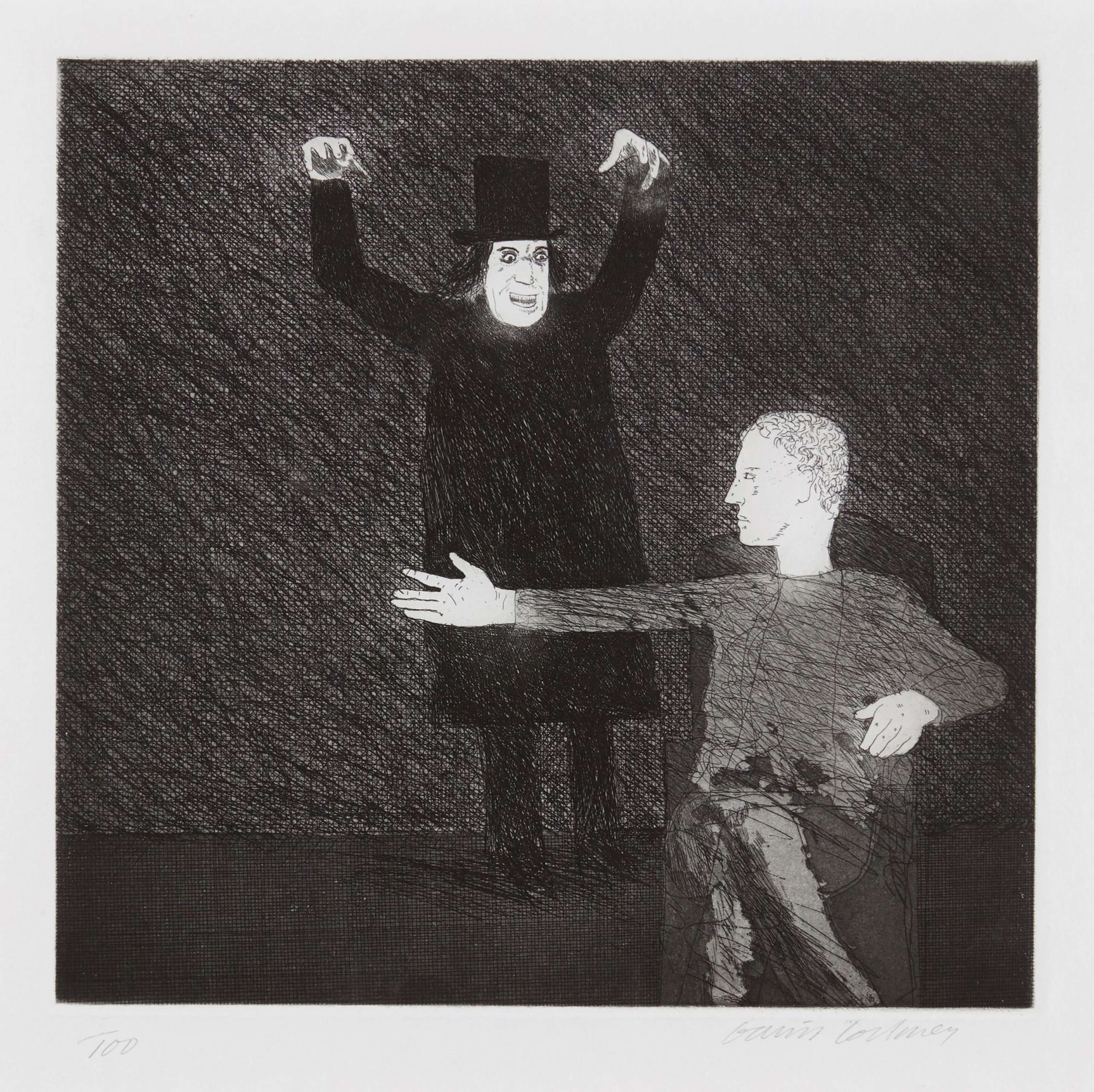
Hockney also made use of aquatint for shading, a printmaking technique that produces tonal effects using acid to eat into the printing plate. This allowed him to bring darker and lighter tones to create depth and contrast in works such as The Lake (1969) and The Boy Hidden in an Egg (1969).
Extensive cross-hatching is a defining feature of the Six Fairy Tales From The Brothers Grimm series
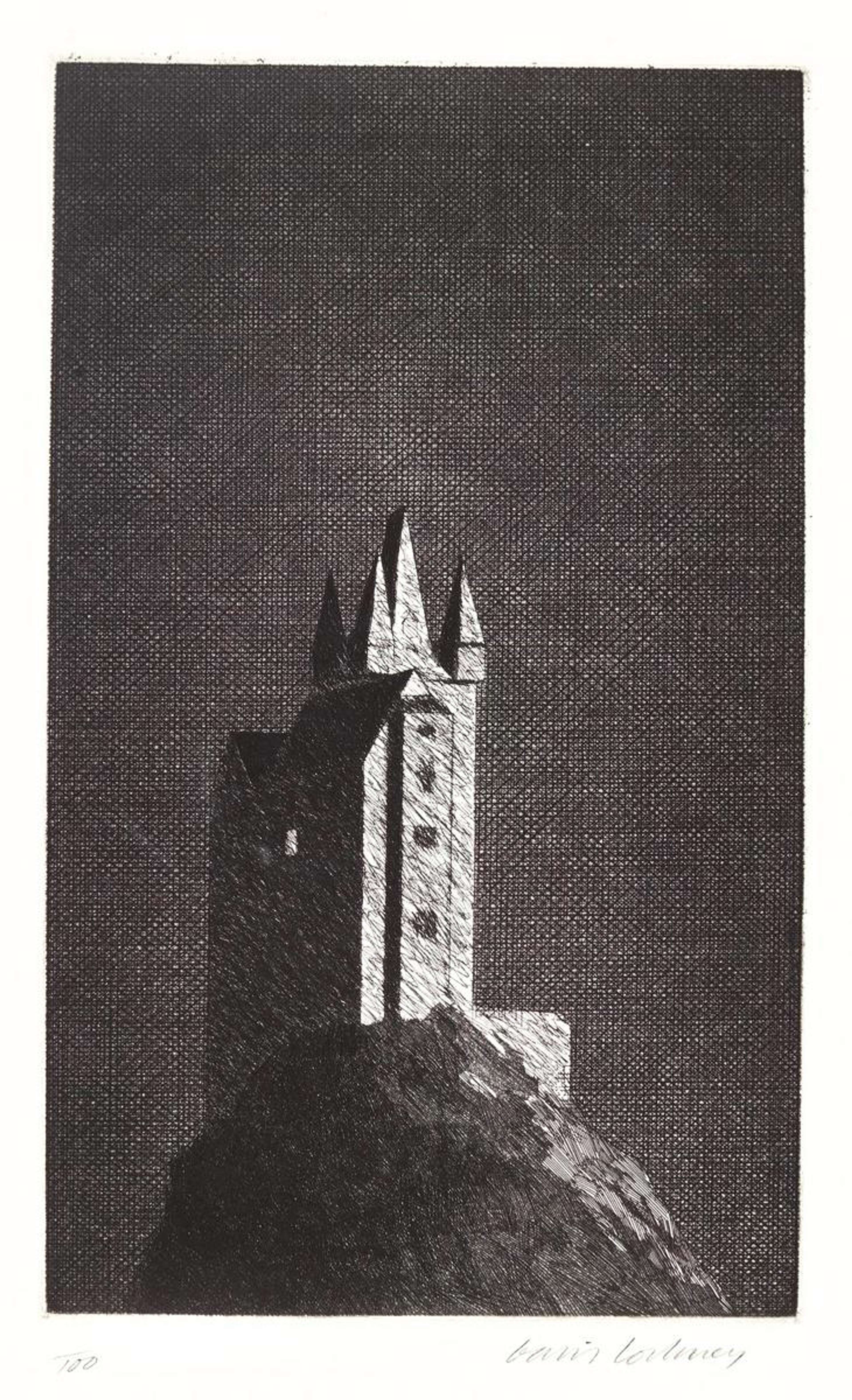
Cross-hatching was a technique Hockney adopted from masters like Hogarth and Giorgio Morandi, and was utilised to achieve richer blacks, seen in pieces such as The Sexton Stood Still As A Ghost (1970) and The Haunted Castle (1969).
These prints are among Hockney's more accessible works
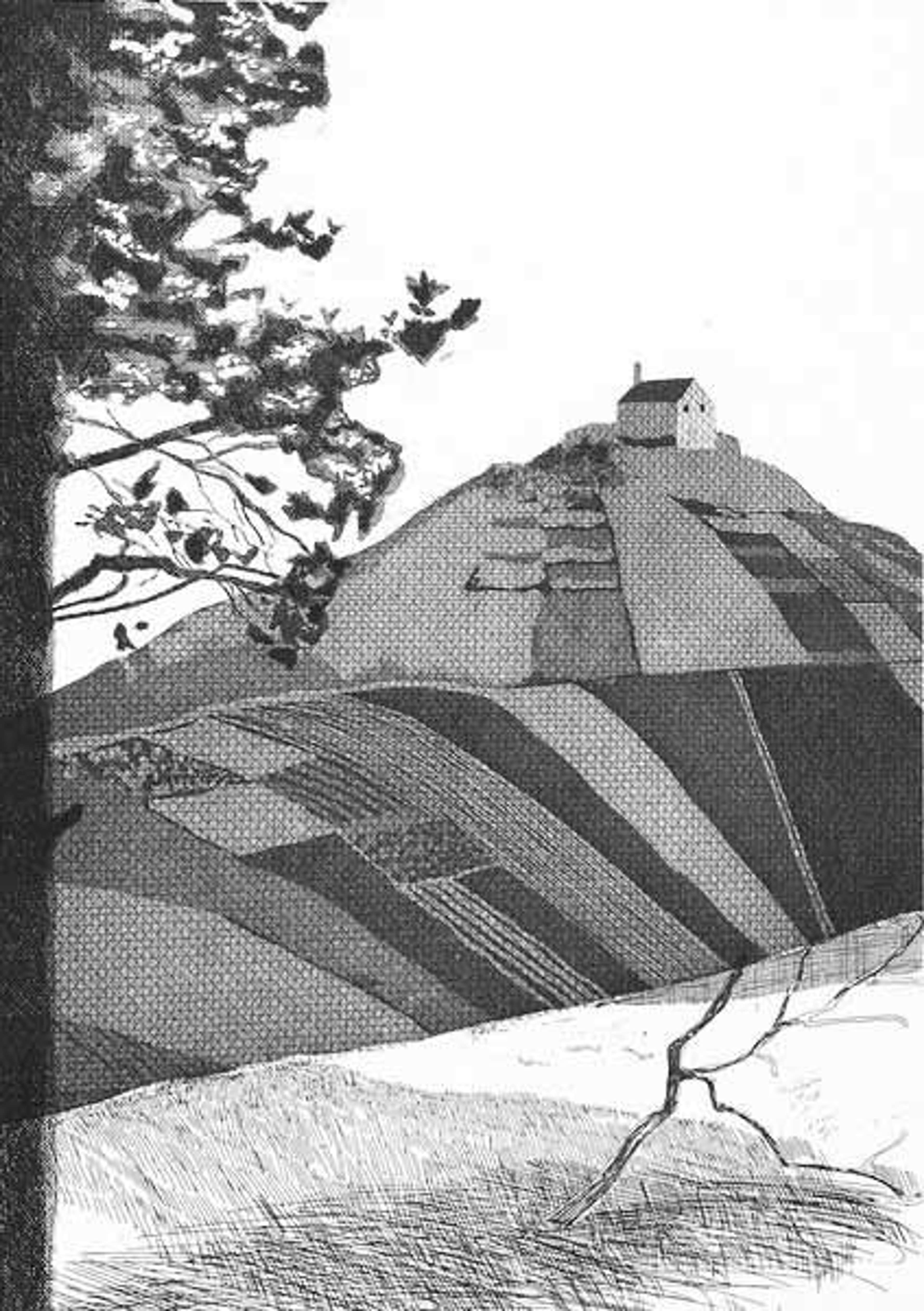
Produced in an edition of 400, Hockney’s blending of familiar stories with his distinctive artistic style makes them timeless classics for collectors, as well as offering an attractive entrypoint for new collectors.
Hockney's artwork brings out the psychological complexity of the tales
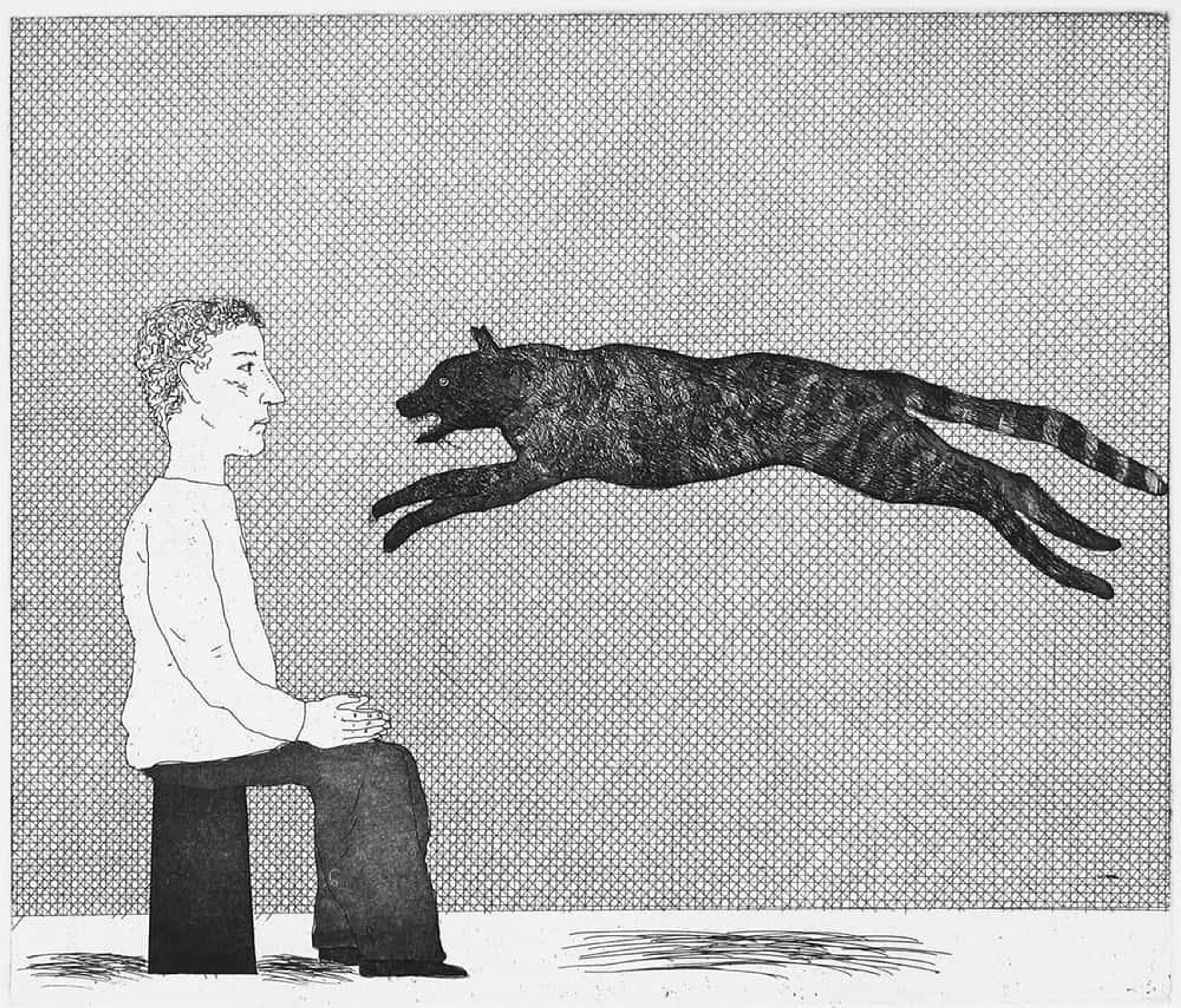
Hockney’s series focuses on the fairy tales’ enduring themes of fear, magic, and transformation, while allowing viewers to interpret much of the imagery themselves. This collection uniquely blends modern art with traditional storytelling, showcasing Hockney's deep passion for both visual and literary expression.
The series minimalist nature contrasts with the complexity of the tales
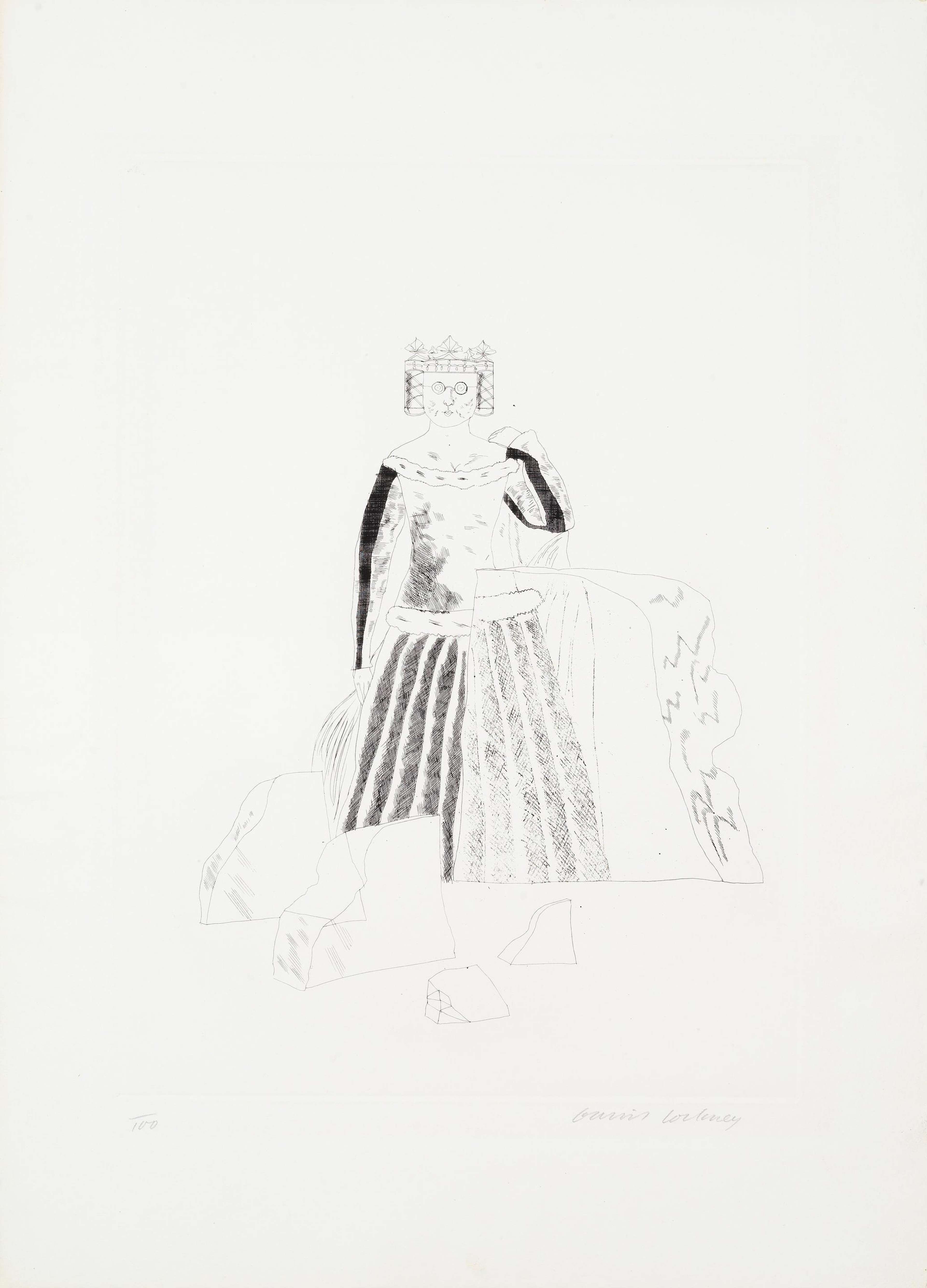
Hockney's etchings are known for their minimalist, almost whimsical style, with pieces such as Pleading For The Child (1969) contrasting with the often dark and complex nature of the Grimm Brothers' stories.
This series was published in book format
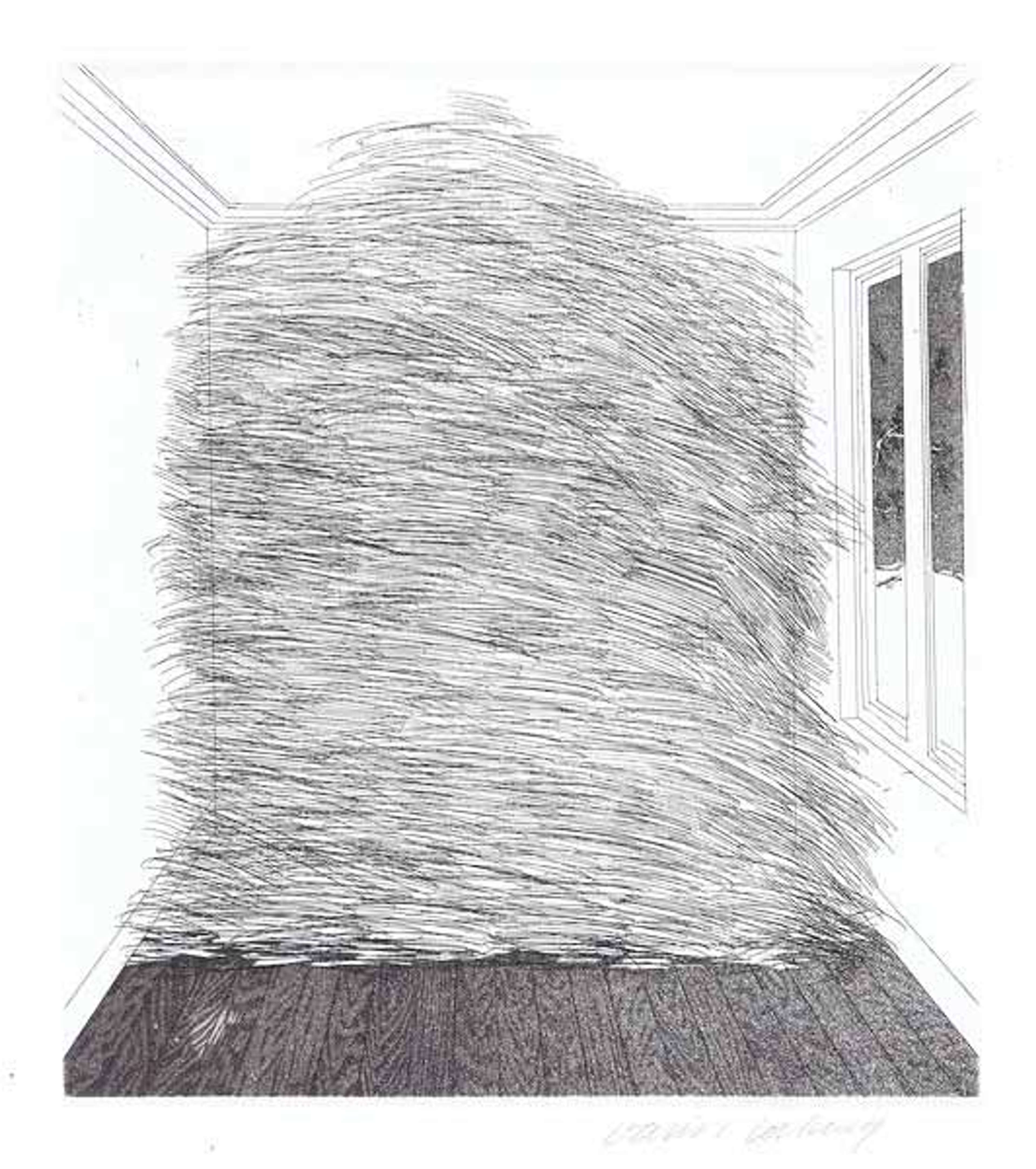
The etchings were published as a limited edition book by Petersburg Press in 1970, with accompanying text from the Brothers Grimm's tales.