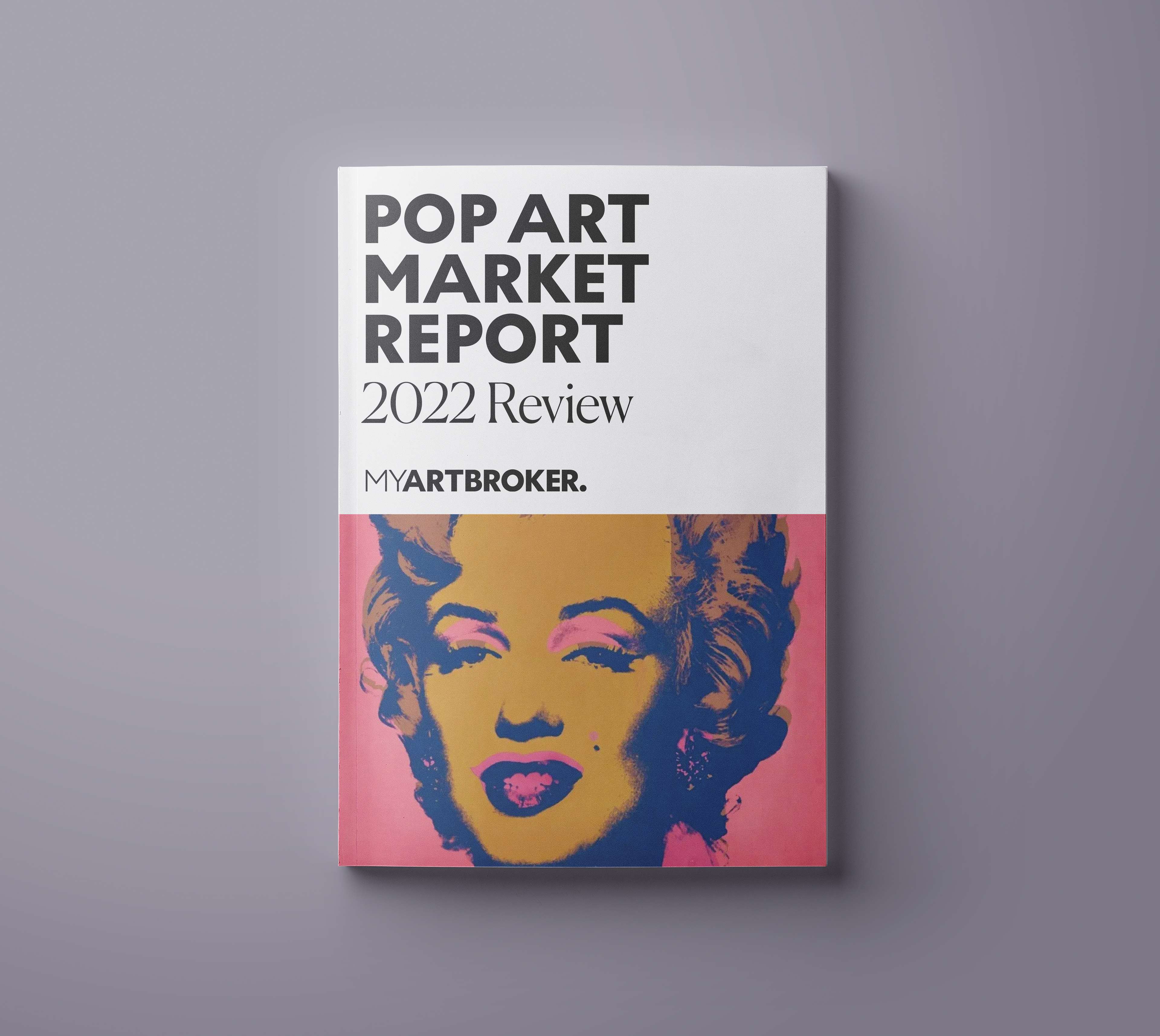
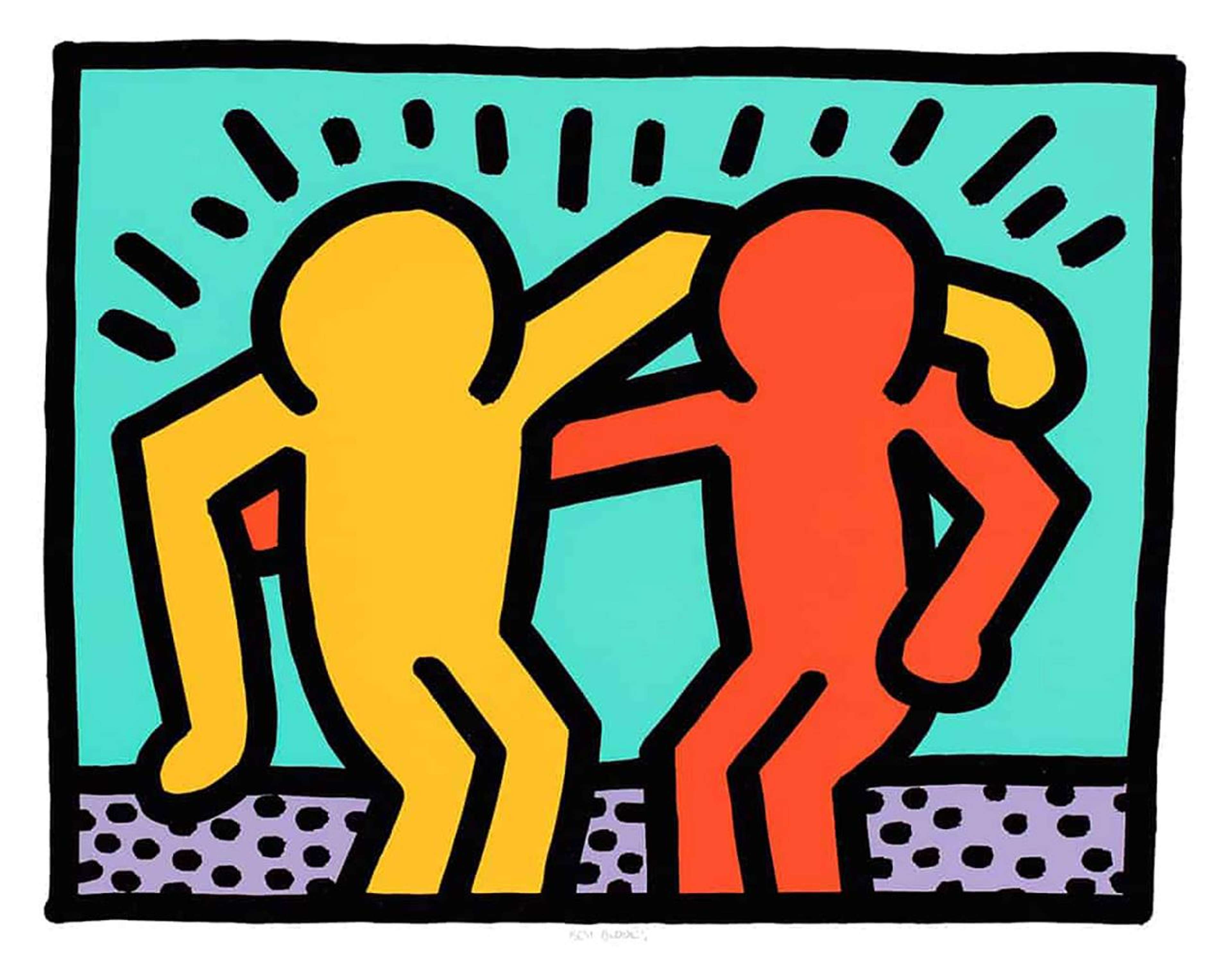
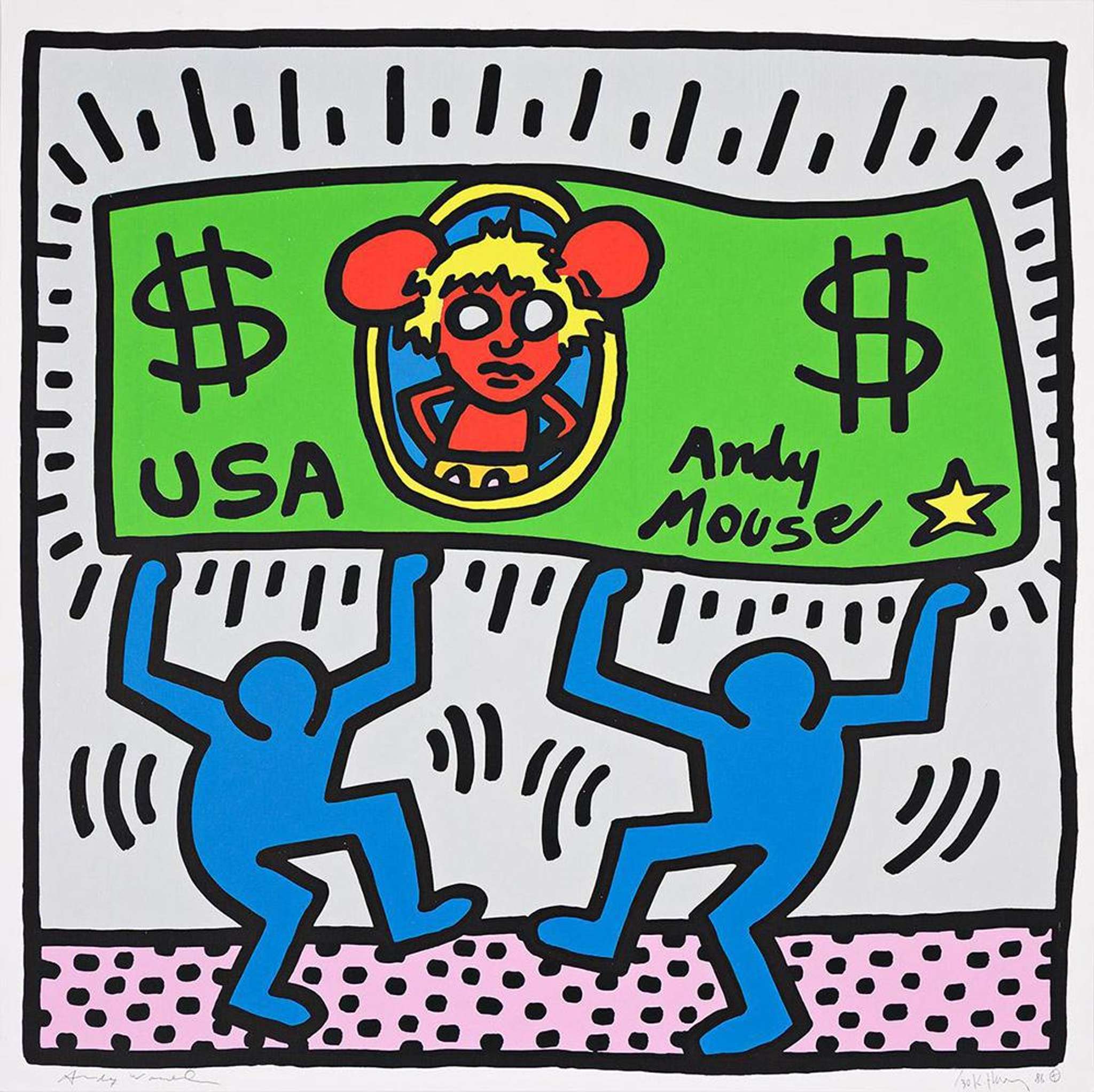
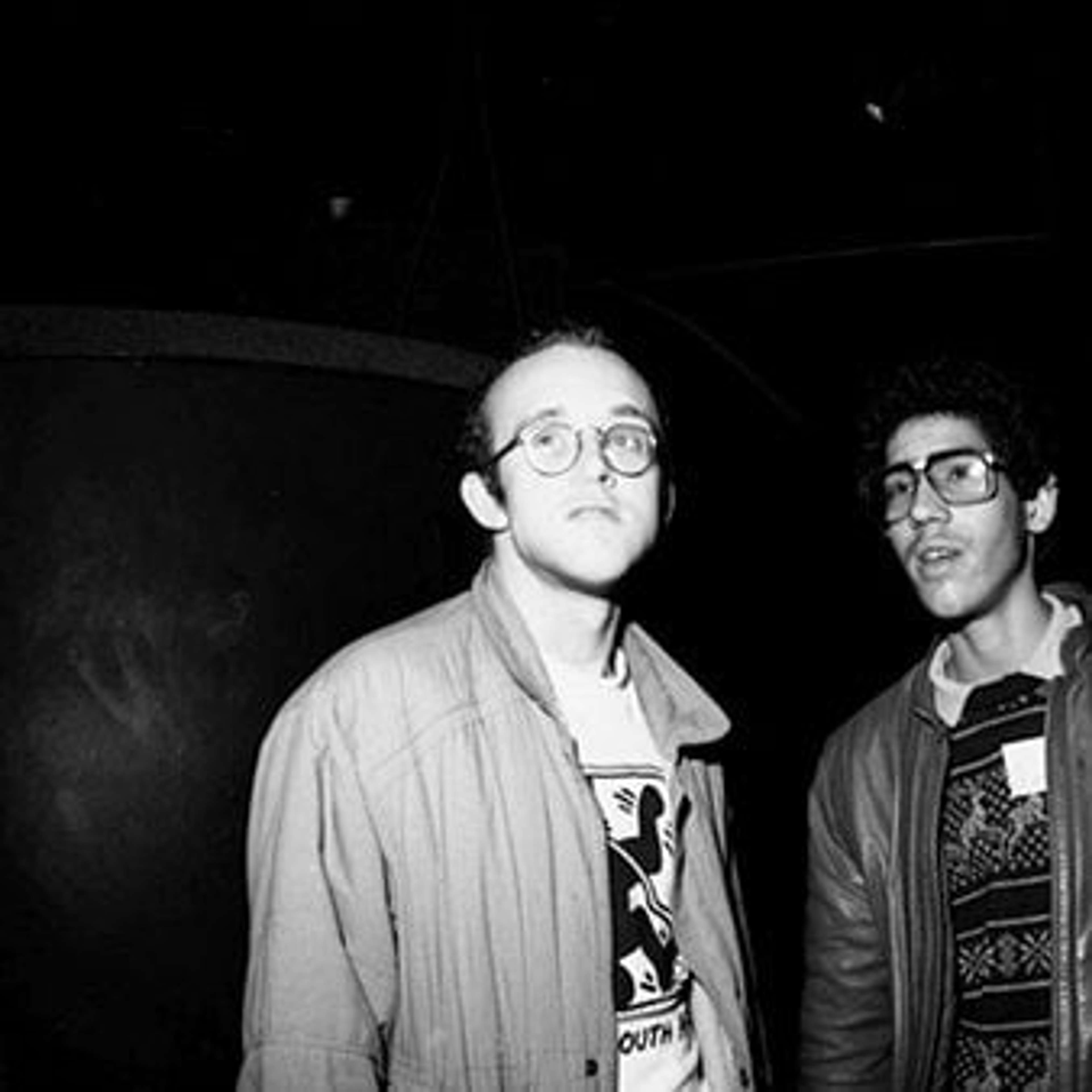
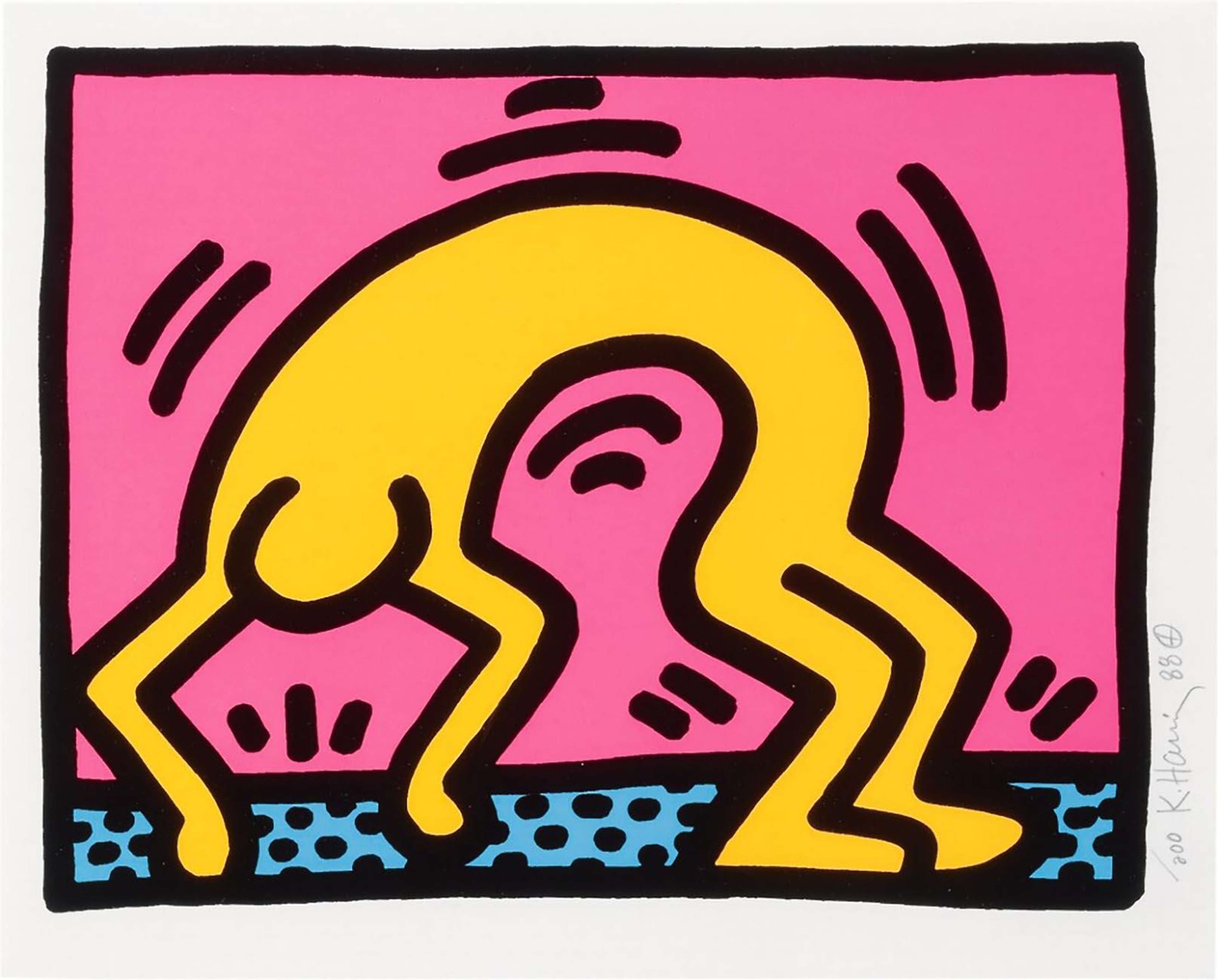
Keith Haring’s Pop Shop series brings together some of his most famous iconography. Each print is filled with bright colours and the artist’s signature graphic style, showing many unusual, dancing figures.
The Pop Shop drawings were originally artworks sold at Haring’s famous Pop Shop.
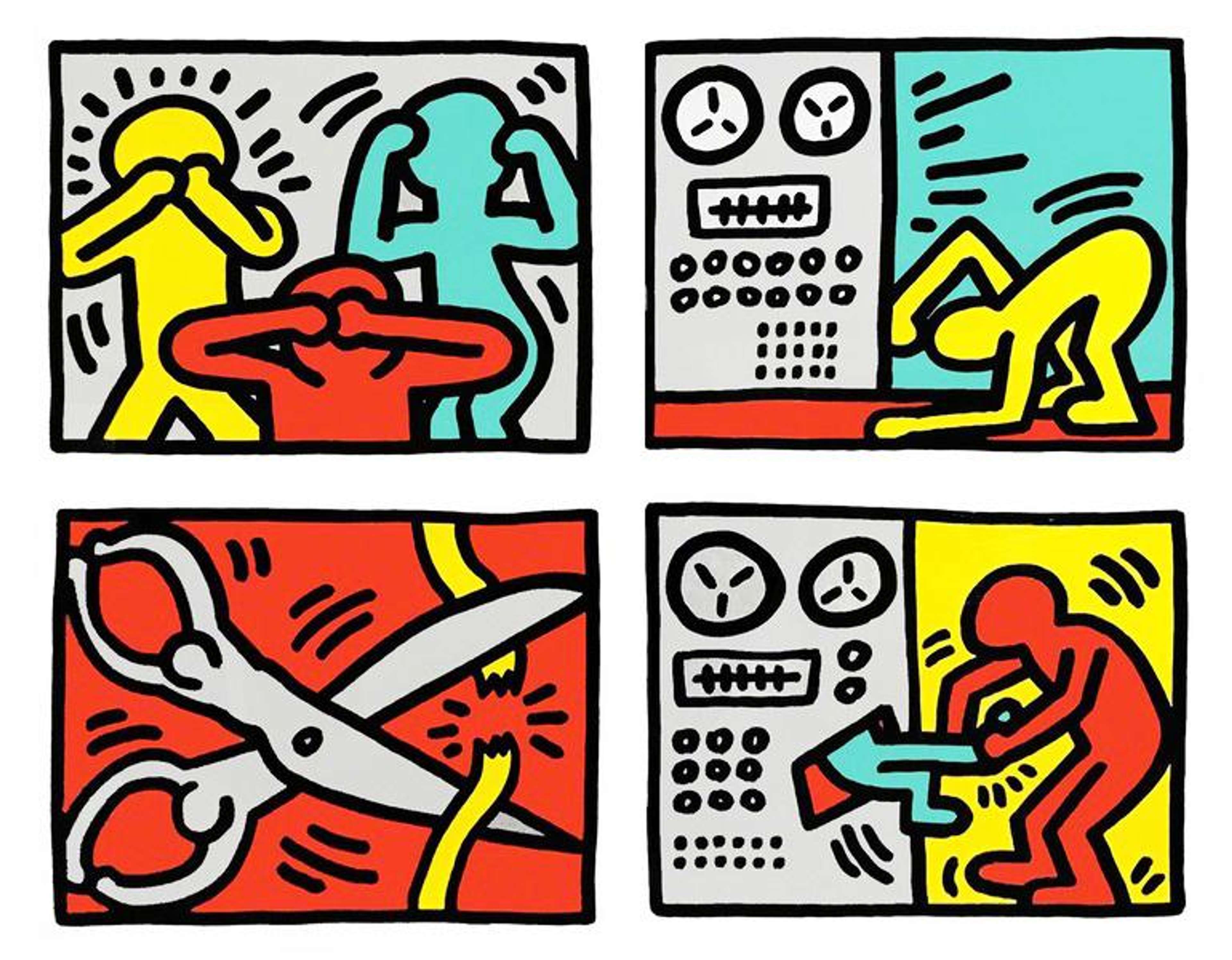
In 1986, Haring opened the Pop Shop in downtown Manhattan, seeing the boutique primarily as an extension of his work where his art could be accessible to everyone. The Pop Shop series represents some of the works created over those years when the Shop was thriving between 1987 and 1990.
The Pop Shop opened in 1986, a year before this series was produced.
The flagship location for Haring’s Pop Shop opened in 1986 in Manhattan’s SoHo neighborhood on 292 Lafayette Street.
The Pop Shop was inspired by Andy Warhol.

Haring’s Pop Shop was directly inspired by Warhol’s Factory, and stemmed from his aspiration to make art accessible for a broad public audience beyond the realms of the gallery and dealerships.
The Pop Shop was an artwork itself.
Haring said of this: “The Pop Shop sort of grew naturally out of what the work was becoming anyway. The images had become part of the world and part of a universal culture. I had to go with that idea and let it happen, let it become part of the culture, let it become part of the mass culture instead of taking it back into the art world and hiding in the art world, which is where I was trying to break out of in the first place.”
Haring’s Pop Shop sold merchandise for 50 cents.
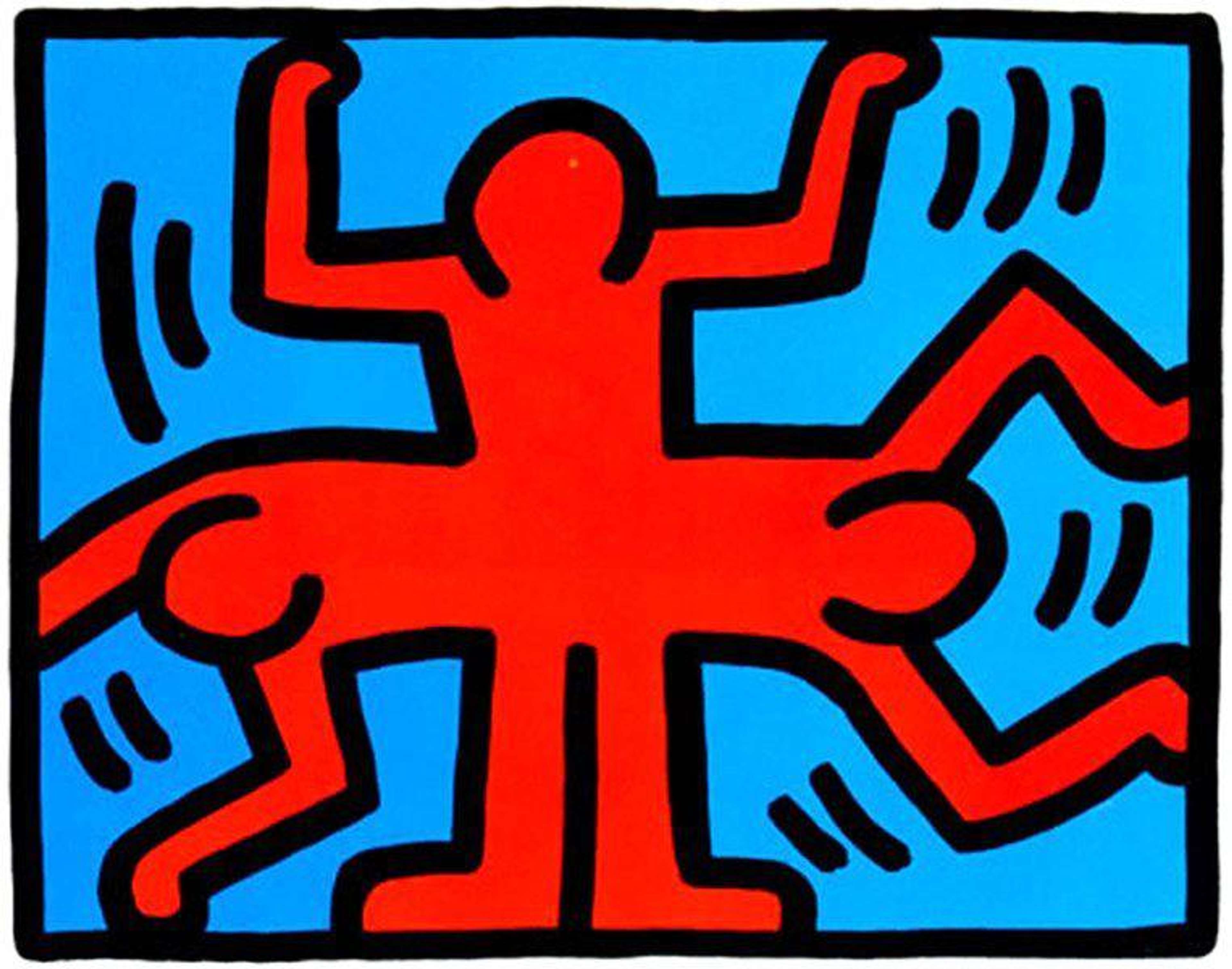
Aimed at kids and collectors alike, the Pop Shops were a place where Haring could sell his art for as little as 50 cents. The store stocked t-shirts, badges and magnets featuring his now ubiquitous designs. Speaking of the importance of opening the shop as opposed to making large canvases to please collectors, Haring said, “I could earn more money if I just painted a few things and jacked up the price. My shop is an extension of what I was doing in the subway stations, breaking down the barriers between high and low art”.
Another Pop Shop opened in Japan.
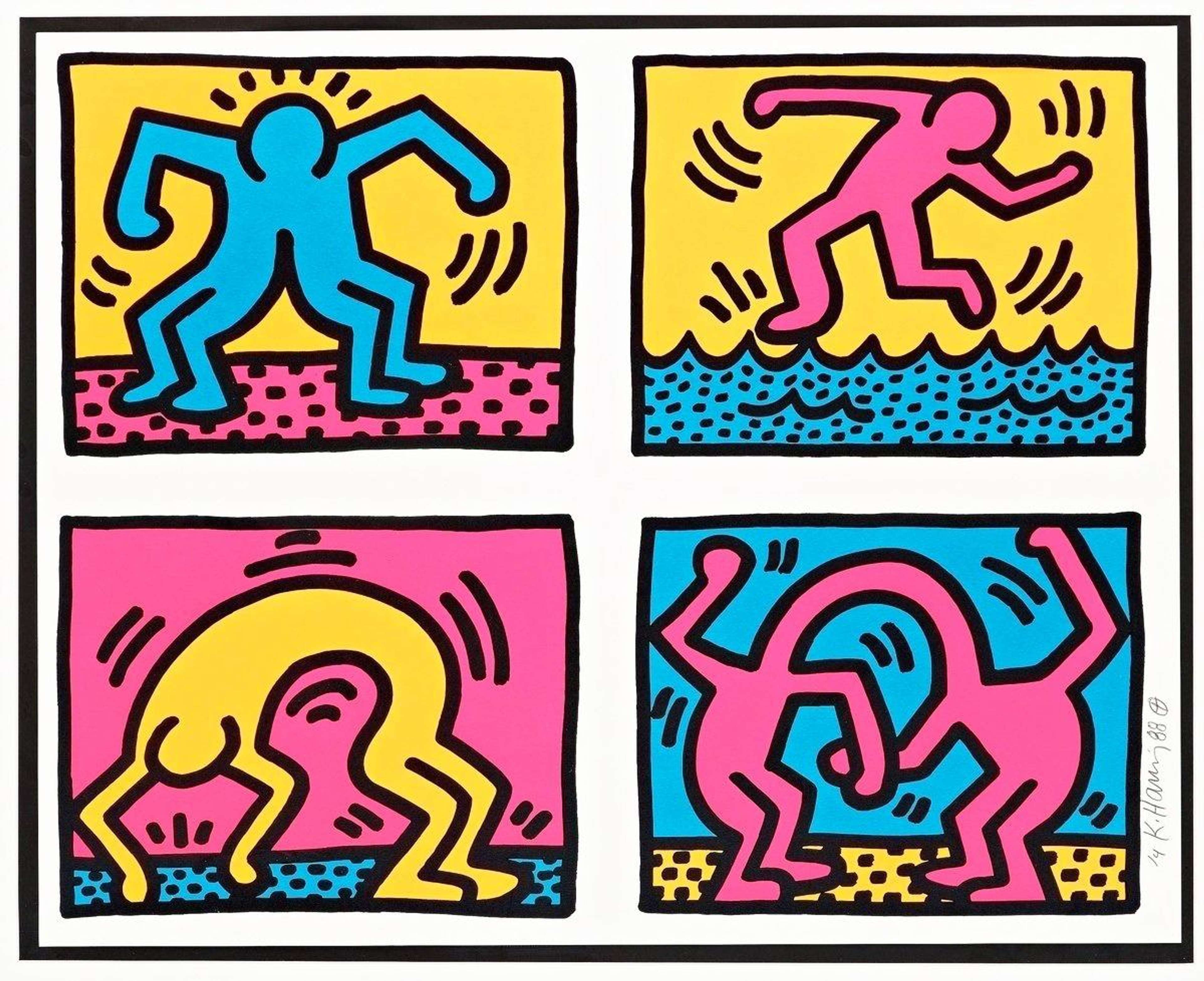
The Pop Shop was met with such large success that in 1988 a further store was opened in Tokyo.
Profits from the Pop Shop went to charity.
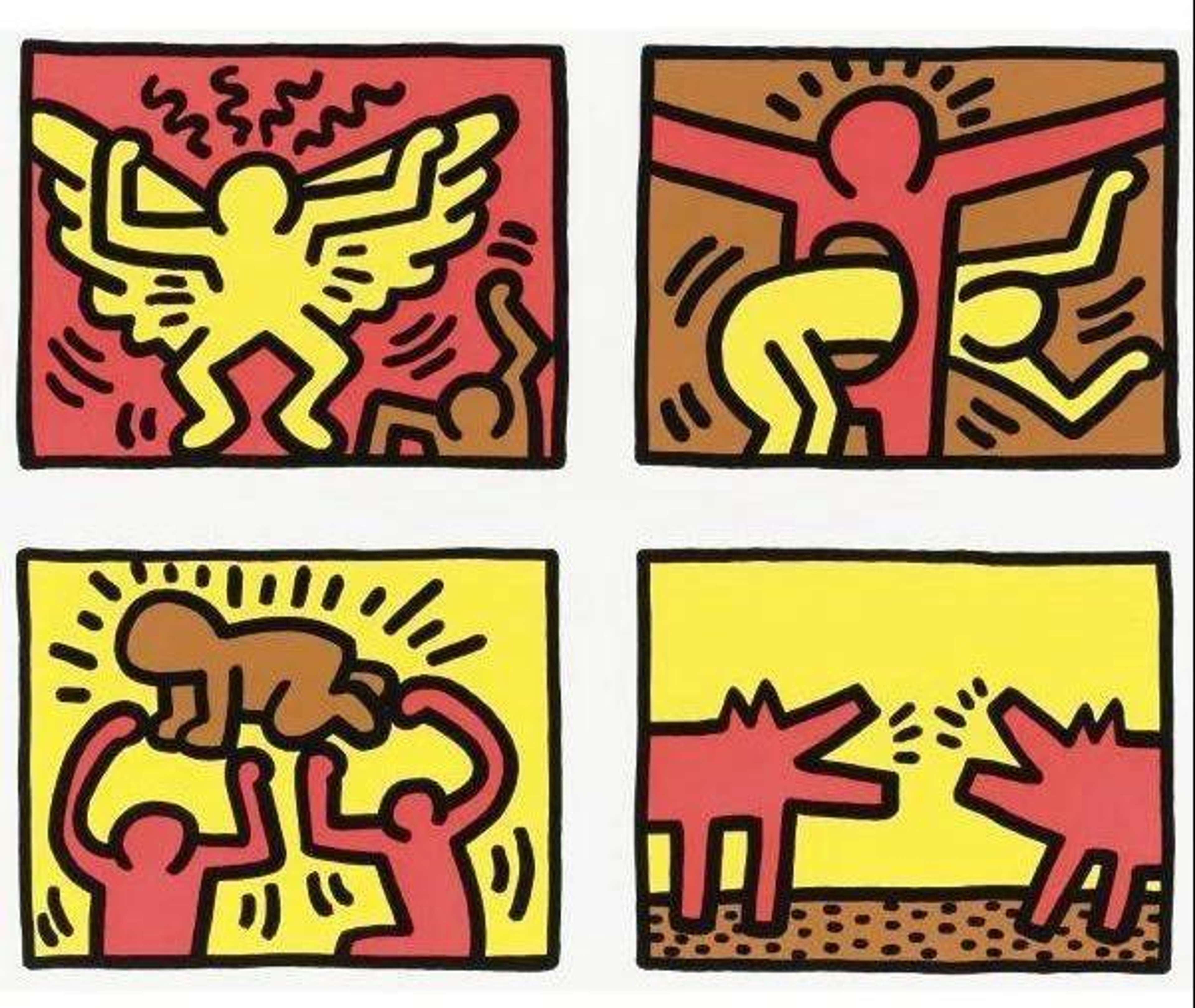
The Pop Shop was an anti-elitist endeavour by Haring and indeed, the profits from the shop were distributed to children’s charities, educational organisations and AIDS research.
The Pop shop closed in 2005.
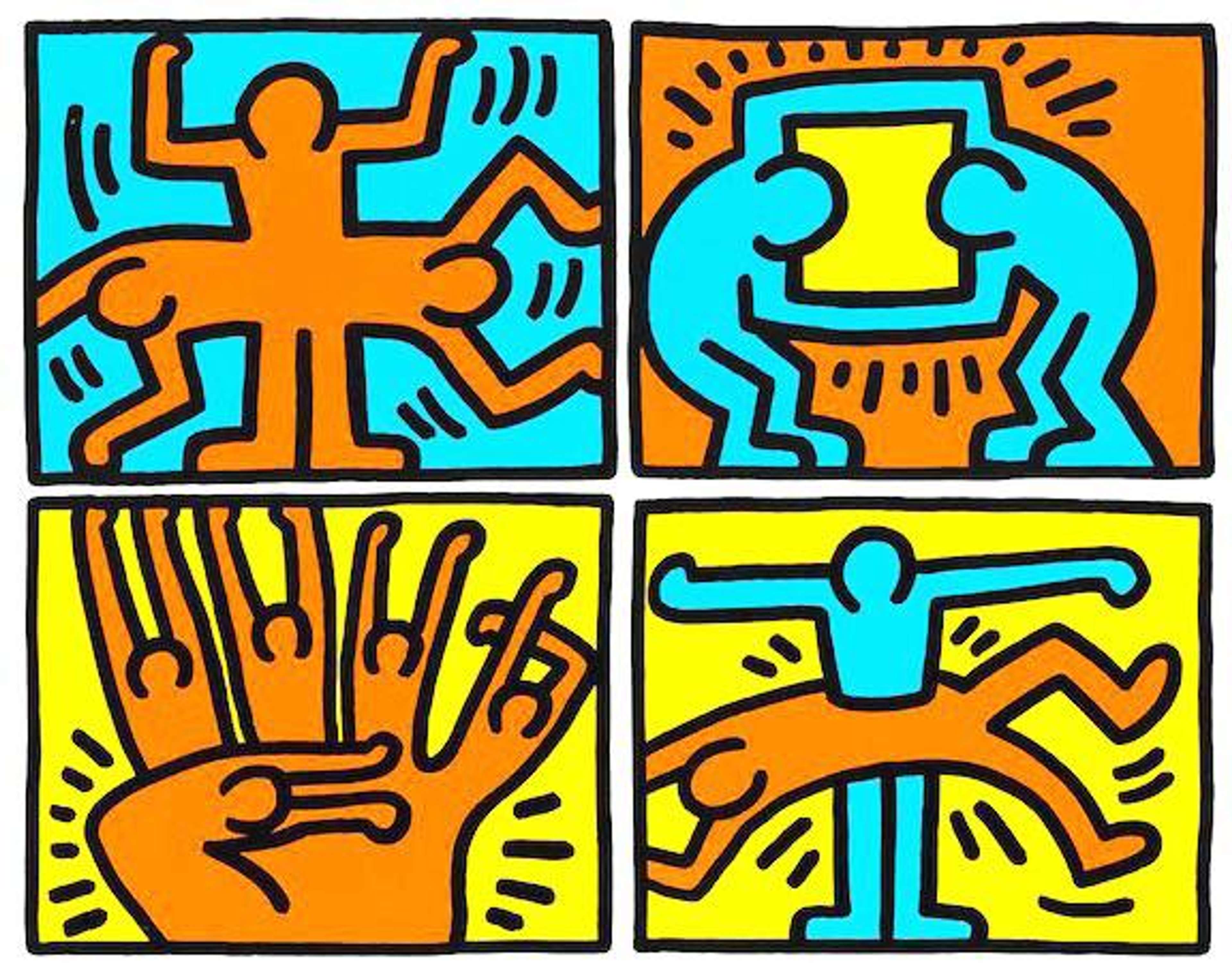
After twenty years of selling affordable clothing and gift items all featuring Keith Haring’s trademark icons, in September 2005 the Pop Shop finally closed its doors to the public.
These symbols became Haring’s most recognisable.
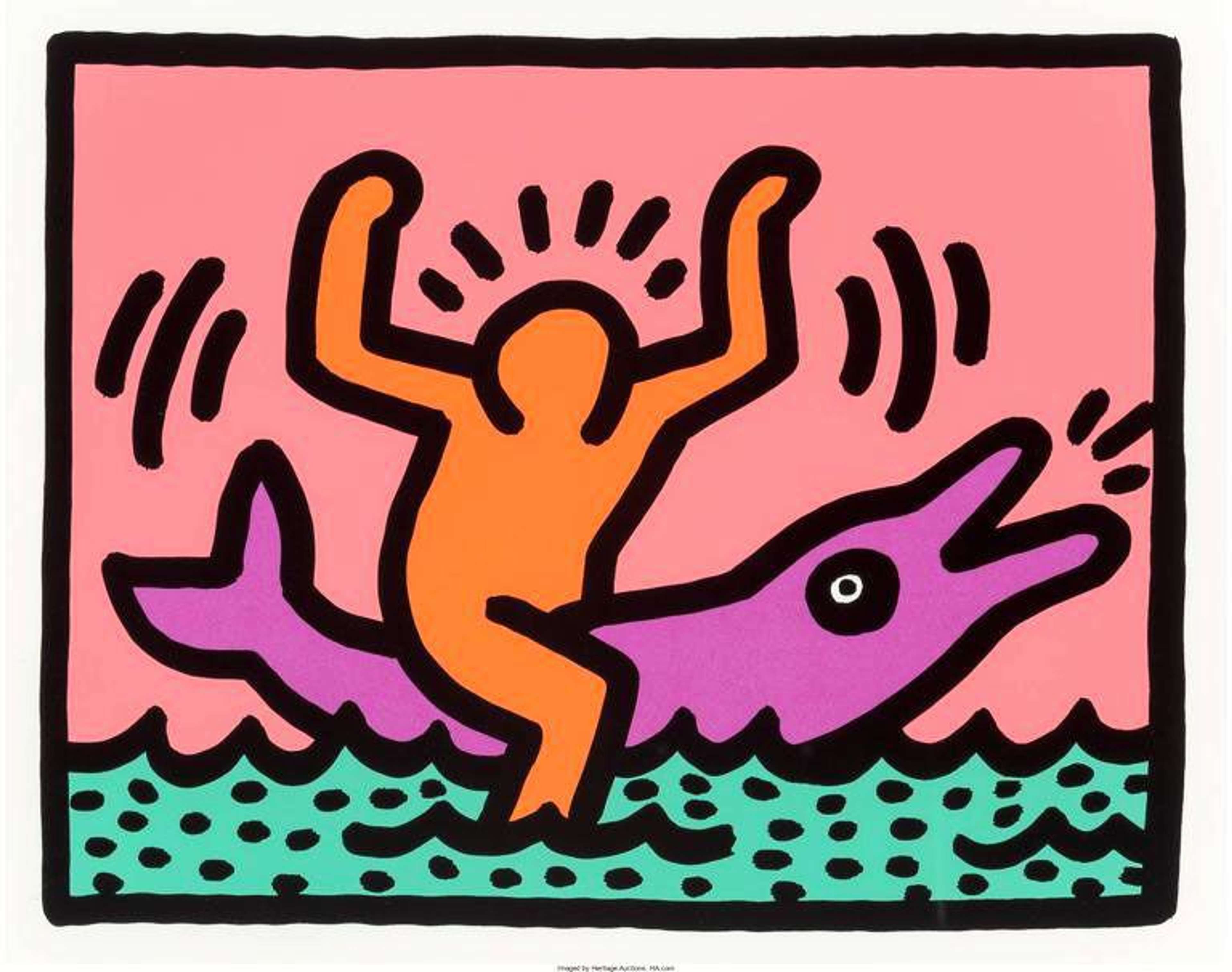
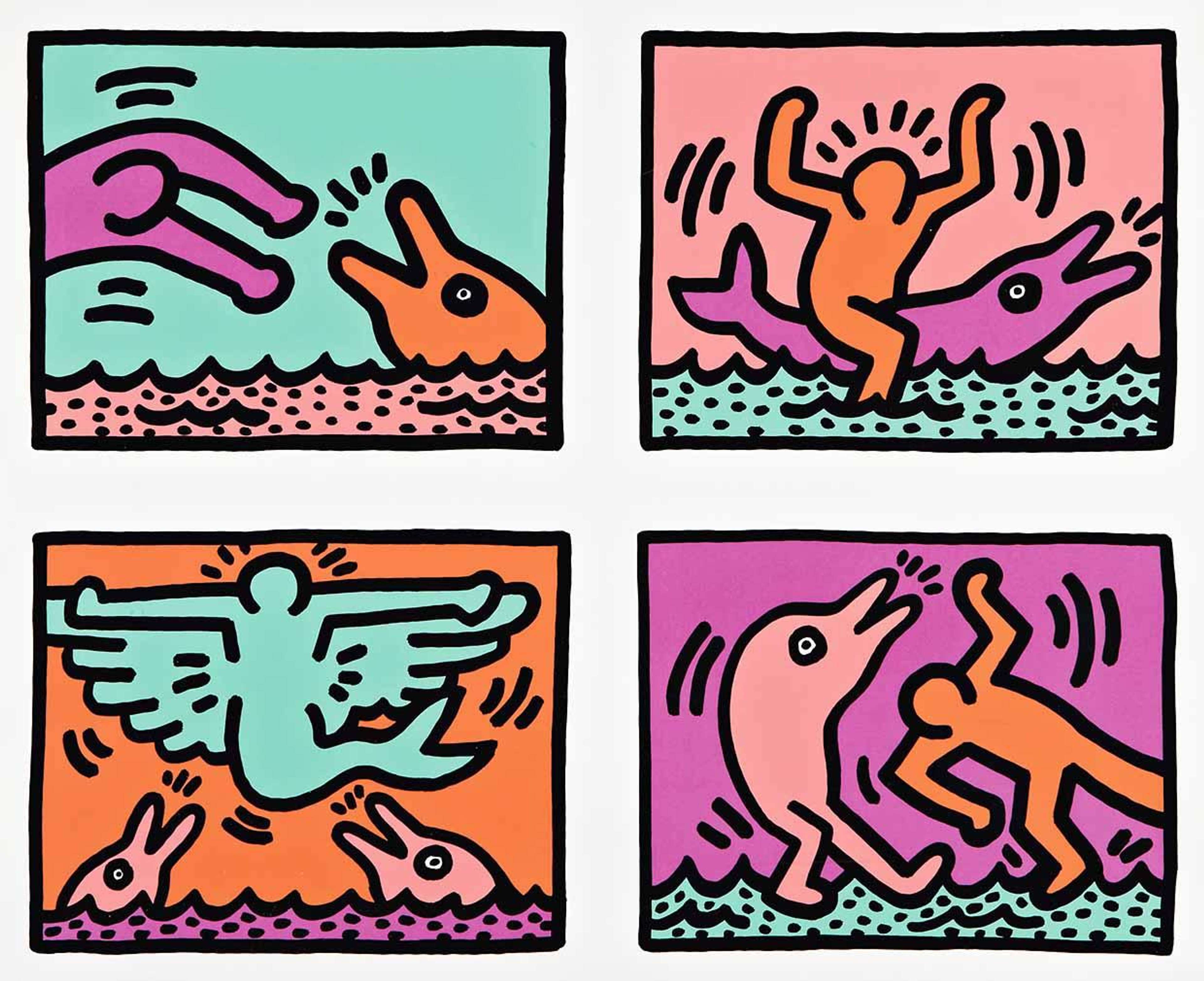
Typical of Haring’s street art style, developed in the early 1980s in the blank advertisement spaces in New York’s subway, these prints are created using thick, black outlines and highly simplified form. These early experiments resulted in a style and iconography for which Haring would become world famous, his barking dog, radiant child and winged angel and devil-like figures instantly recognisable for their originality and playfulness.
Haring’s Pop Shop series shows his interest in art as a language.
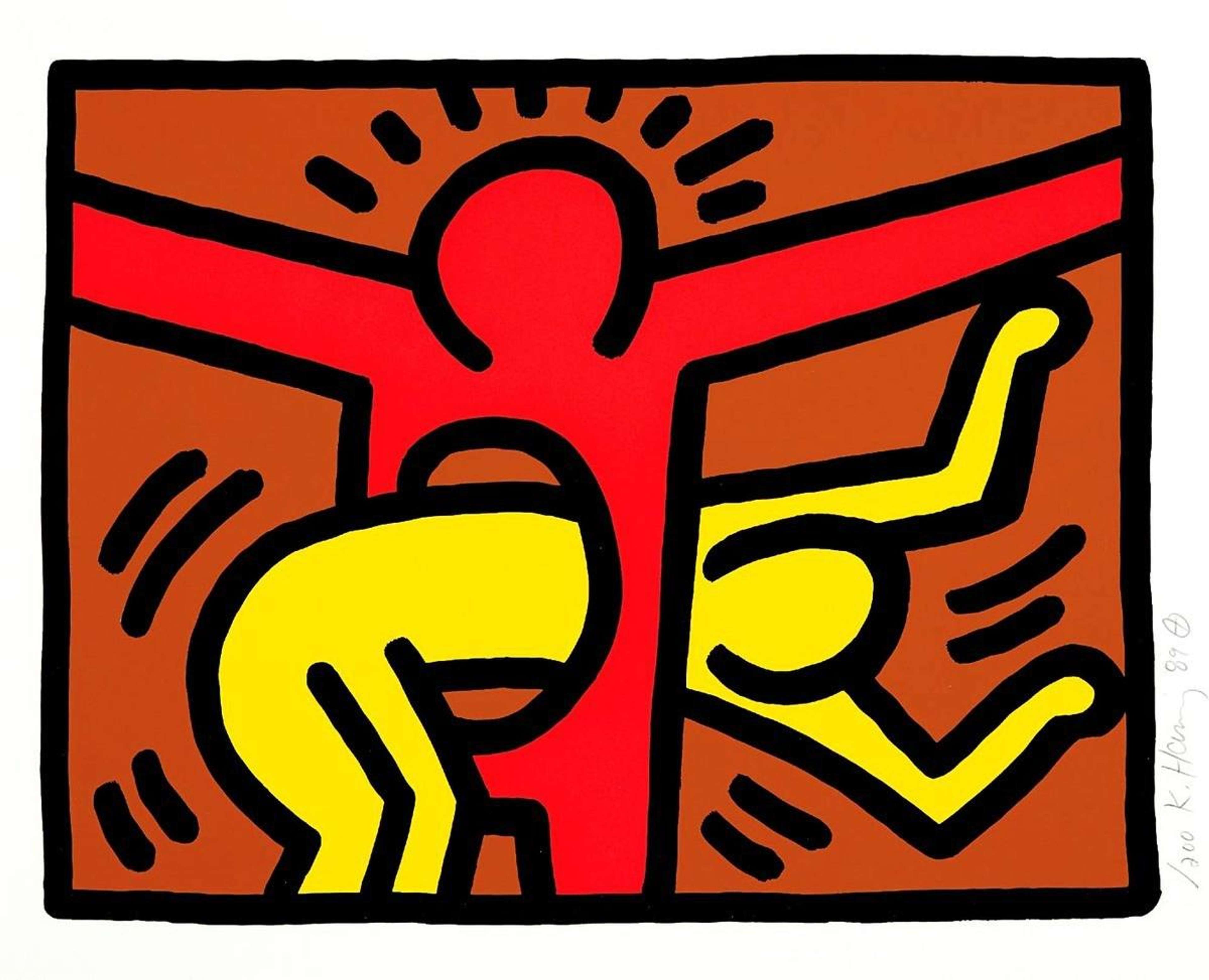
Haring learned about Semiotics at the School of Visual Arts in New York and began to think about how images could be used as a language instead of words. Important to this was the repetition of symbols, like the dancing figures in this series.