

Key Takeaways
Andy Warhol’s investment outlook in 2026 is best read through auction trends, average value movement, and the behaviour of key market segments. Use these signals to assess risk, pricing stability, and long-term positioning in the print market.
This structural depth allows the market to absorb shifts in collector behaviour and economic cycles with limited volatility, positioning Warhol as a benchmark for stability within the blue chip print sector.
Is Buying An Andy Warhol Print a Good Investment?
From 2021 onward, Warhol’s print market has been shaped by changes in what comes to market rather than shifts in demand. Sales value rose sharply through 2021 and peaked in 2022, driven by an unusually high concentration of complete sets and trial proofs. These formats materially lifted total value without requiring a comparable increase in transaction volume, reflecting how supply composition can reweight the market.
From 2023, total sales value moderated while transaction volume remained elevated. This divergence reflects a clear shift away from portfolio-scale material toward main editions. Participation did not contract; instead, value redistributed across a broader range of price points as fewer top-tier formats appeared publicly.
What Happened in Andy Warhol’s Print Market at Auction in 2025?
Auction performance in 2025 reflected a market operating at scale rather than one driven by exceptional supply. Total sales value increased modestly while transaction volume reached one of its highest levels of the period, confirming sustained participation across Warhol’s main-edition market.
Unlike the peak years earlier in the cycle, 2025 was not defined by a surge of complete sets or rare trial proofs. Instead, activity was distributed across a broader range of works, with value generated through volume rather than concentration. This points to a mature market phase where liquidity remains strong even as top-tier material surfaces more selectively.
What Is The Average Value Of My Andy Warhol Print?
Average values over the same period reflect shifts in format. ASP rose sharply into 2022 as complete sets and trial proofs made up a larger share of transactions, increasing the annual average through composition rather than broad repricing.
From 2023 to 2025, average values adjusted downward as activity concentrated in the main-edition tier. This softened the market-wide average even as transaction volume increased, indicating redistribution. In 2025, volume growth outpaced value growth, reinforcing this pattern.
Importantly, this recalibration occurred alongside strong individual results at the upper end of the market. Select works continued to command premiums when image recognition, rarity, and format aligned. The absence of broad price compression confirms that pricing adjusted through format distribution, not discounting.
By 2025, Warhol’s print market was operating in a post-peak phase defined by sustained liquidity, selective value formation, and stable pricing across volume – a structure that underpins its long-term investment profile.
Top Performing Print Collections In Andy Warhol’s Current Market
Warhol’s print market is structurally tiered rather than hierarchical. Value does not migrate uniformly across the catalogue, nor does it accumulate consistently within a single format. Instead, different segments of the market contribute value under different supply conditions.
Warhol Main Editions
Main editions form the base of the market. They account for the majority of annual transactions and provide the liquidity that sustains Warhol’s print ecosystem year-to-year. In periods where higher-value formats are scarce, main editions absorb demand and maintain market continuity. Their pricing is comparatively stable, shaped by image recognition, condition, and series familiarity rather than scarcity alone.
Warhol Trial Proofs and Complete Sets
Trial proofs and complete sets operate differently. These formats do not drive activity consistently, but they exert outsized influence on total sales value when they appear. The 2022 peak illustrates this clearly: a relatively small number of complete sets and trial proofs accounted for a disproportionate share of annual value. When those formats became less available in 2023–2025, total value redistributed across a larger number of lower-priced transactions rather than disappearing from the market.
The Most In-Demand Andy Warhol Prints From Investors
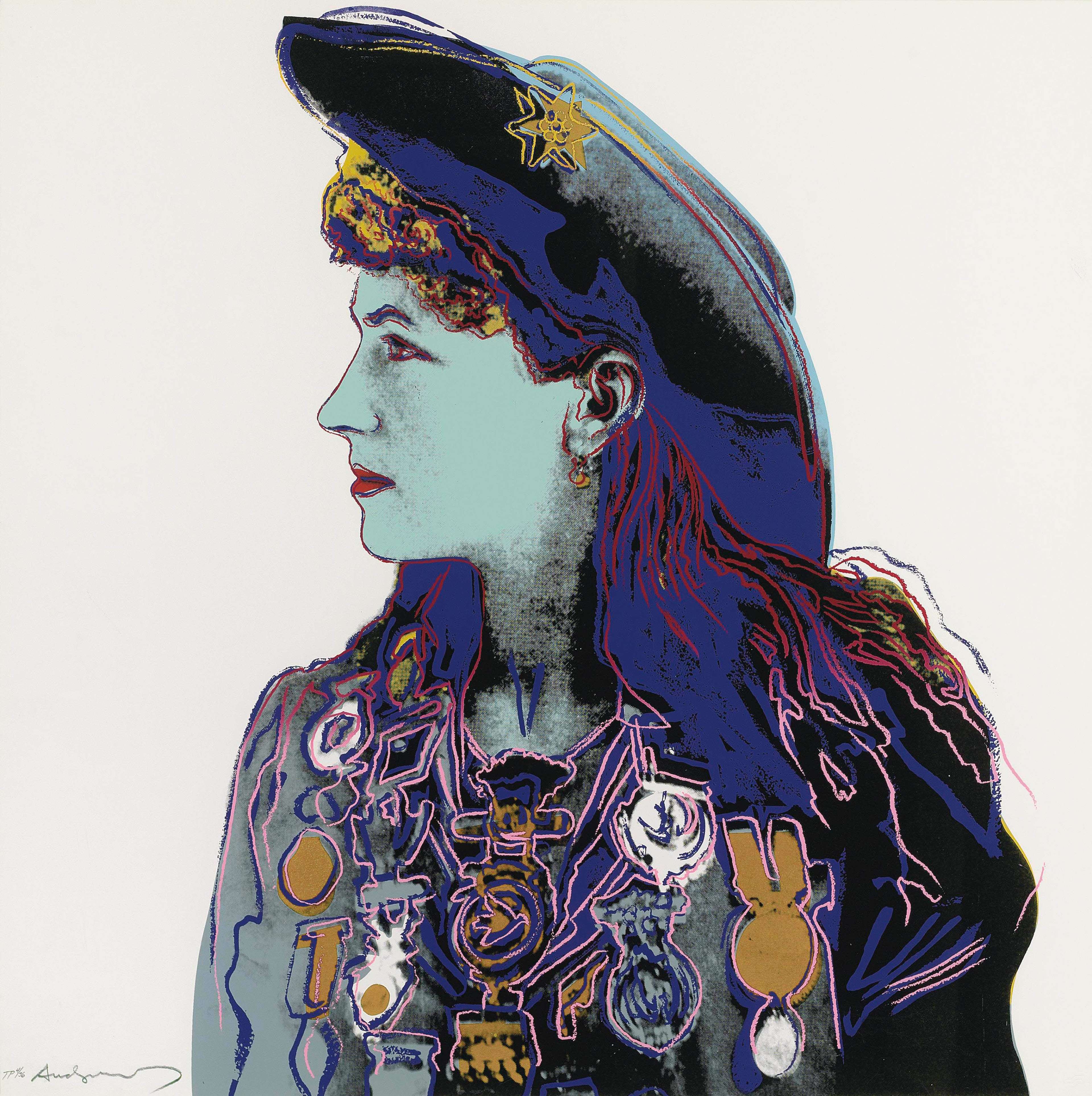
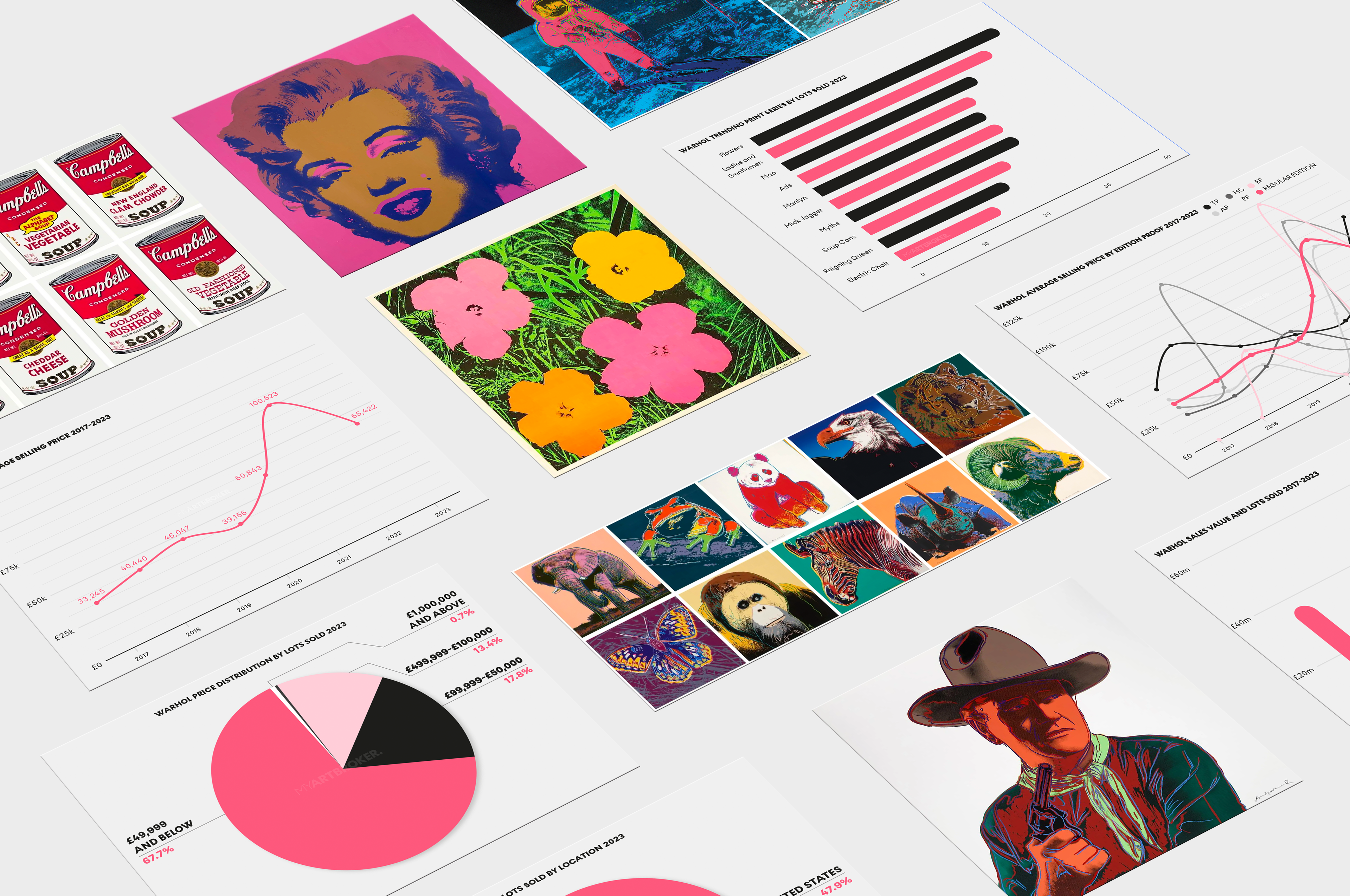
In the current market, the most in-demand Warhol prints remain Endangered Species, Marilyn, Mick Jagger, Ads, and Myths. Each of these series trades actively at the individual-print level, but they also carry exceptional weight as complete sets, which consistently achieve prices above £1 million. The strongest result on record is a complete Endangered Species set, which surpassed £3 million, with Marilyn close behind. Ads and Myths remain comparatively more accessible at the set level, but continue to show sustained value appreciation.
Several of these collections also benefit from demand for rare formats. Endangered Species, Myths, and Ads are supported by trial proofs and sought-after colour variants, which introduce scarcity within otherwise familiar imagery. Marilyn and Mick Jagger do not circulate in trial proofs, but their main editions and artist’s proofs continue to achieve consistently strong results. While Jagger prints have become increasingly scarce, Marilyn saw renewed momentum in 2025, reinforcing its position as one of Warhol’s most reliable pricing anchors.
Beyond the headline series, investor demand also extends to individual works and sets from Moonwalk, Cowboys and Indians, Campbell’s Soup, and Flowers. To understand how these collections compare across liquidity, pricing strength, and market depth, explore the confidence scoring and full analysis in our latest Most Investable Print Collections Report.
What Are The Top Performing Blue Chip Artists Markets?
Among blue chip print markets, Warhol occupies a structurally distinct position defined by scale, repeatability, and entrenched pricing hierarchies. Unlike markets driven by episodic scarcity or sentiment shifts, Warhol’s prints trade within a mature ecosystem where value redistributes across formats rather than repricing abruptly.
Compared to Banksy or Basquiat, Warhol’s market shows lower price volatility. Periods of heightened demand tend to concentrate value in rarer formats – such as complete sets or trial proofs – without destabilising pricing across the broader market. Volume typically adjusts before price, reinforcing stability rather than triggering sharp corrections.
Relative to peers like Hockney or Lichtenstein, Warhol’s key advantage is breadth. Sustained trading occurs across multiple series, formats, and price tiers simultaneously, reducing reliance on a narrow set of benchmark works. This depth allows the market to function consistently even when top-tier material is absent.
For investors, this positions Warhol as a continuity-led market: pricing is supported by repeat participation, strong comparability, and long-established demand rather than momentum or narrative-driven catalysts.
Liquidity In Andy Warhol’s Print Market
Liquidity is one of the defining strengths of Warhol’s print market. Regular circulation of main editions across established series ensures consistent exit routes, even in periods when rarer formats are absent. At the same time, higher-value works – such as complete sets, trial proofs, and premium colour variants – enter the market selectively, concentrating value without impairing turnover elsewhere. This separation allows participation to remain broad while price leadership stays disciplined. For investors, the result is a market where demand is deep, comparables are clear, and liquidity is sustained across cycles rather than dependent on headline moments.
This guide is intended for informational and research purposes only and does not constitute investment advice. All analysis and commentary reflect MyArtBroker’s interpretation of historical and current market data at the time of writing. As market conditions evolve, our views and analysis may change. Individual artworks and editions can perform differently depending on factors such as condition, provenance, timing, and market context. Readers are encouraged to conduct their own research and consult with a specialist before making any acquisition or sale decisions.