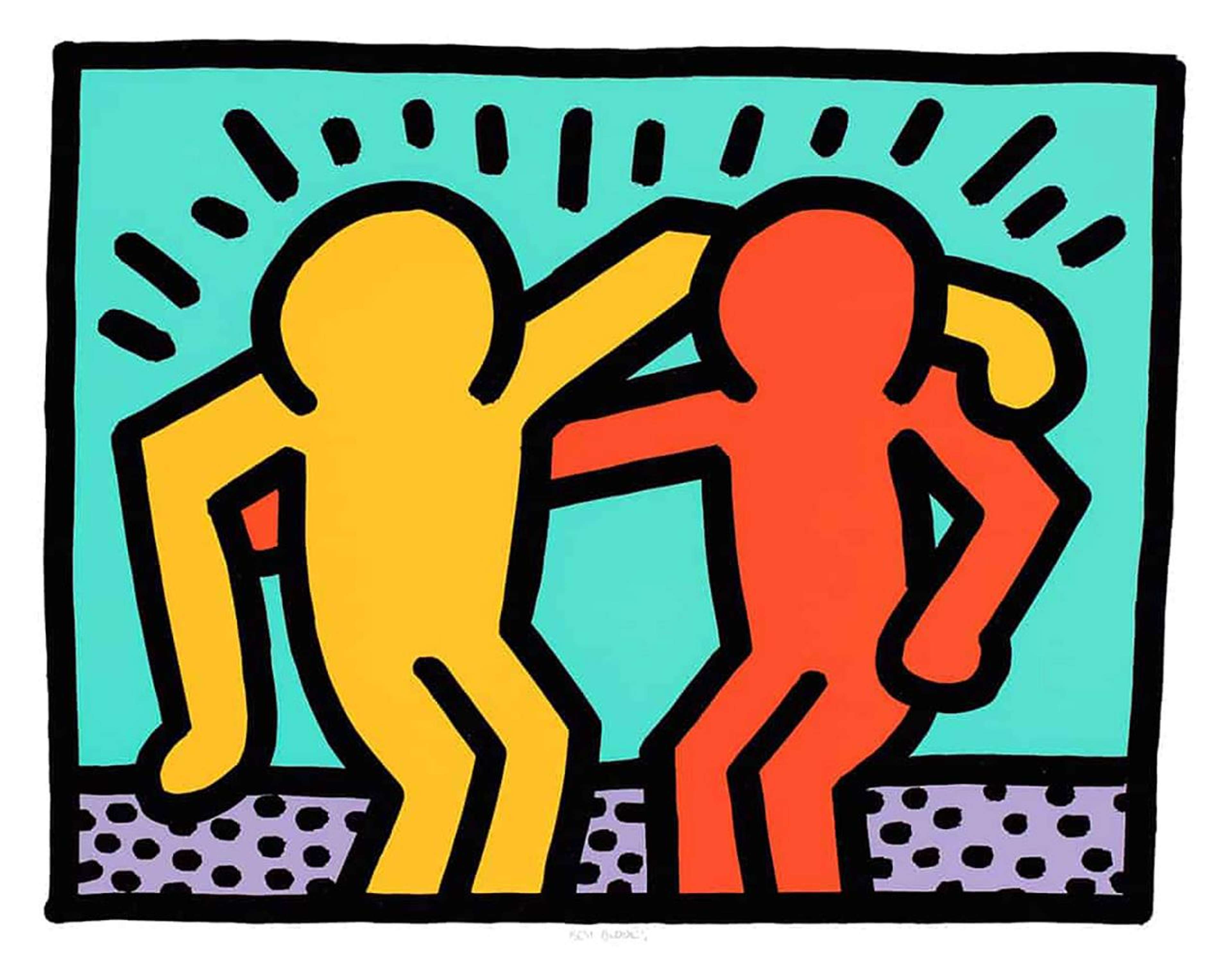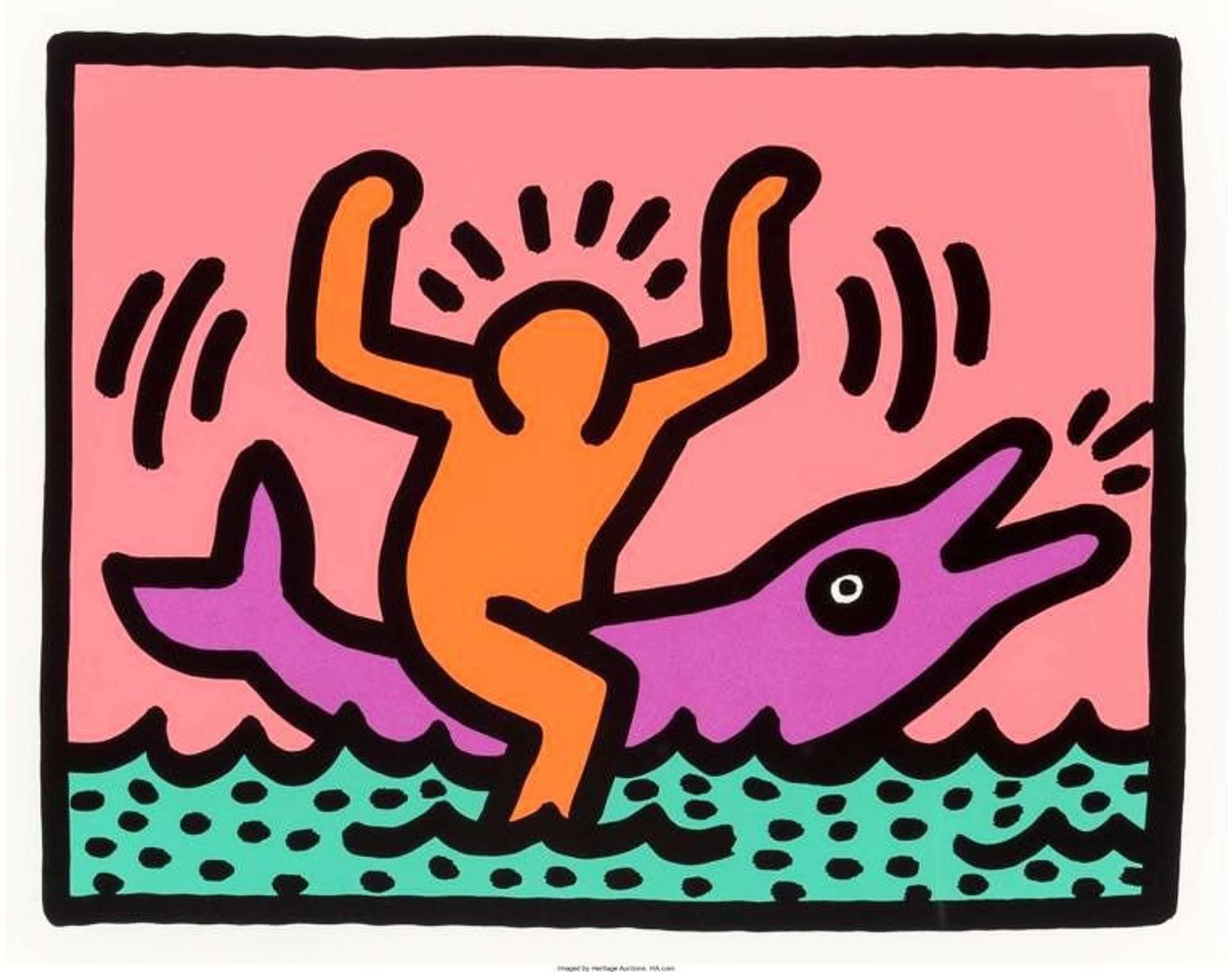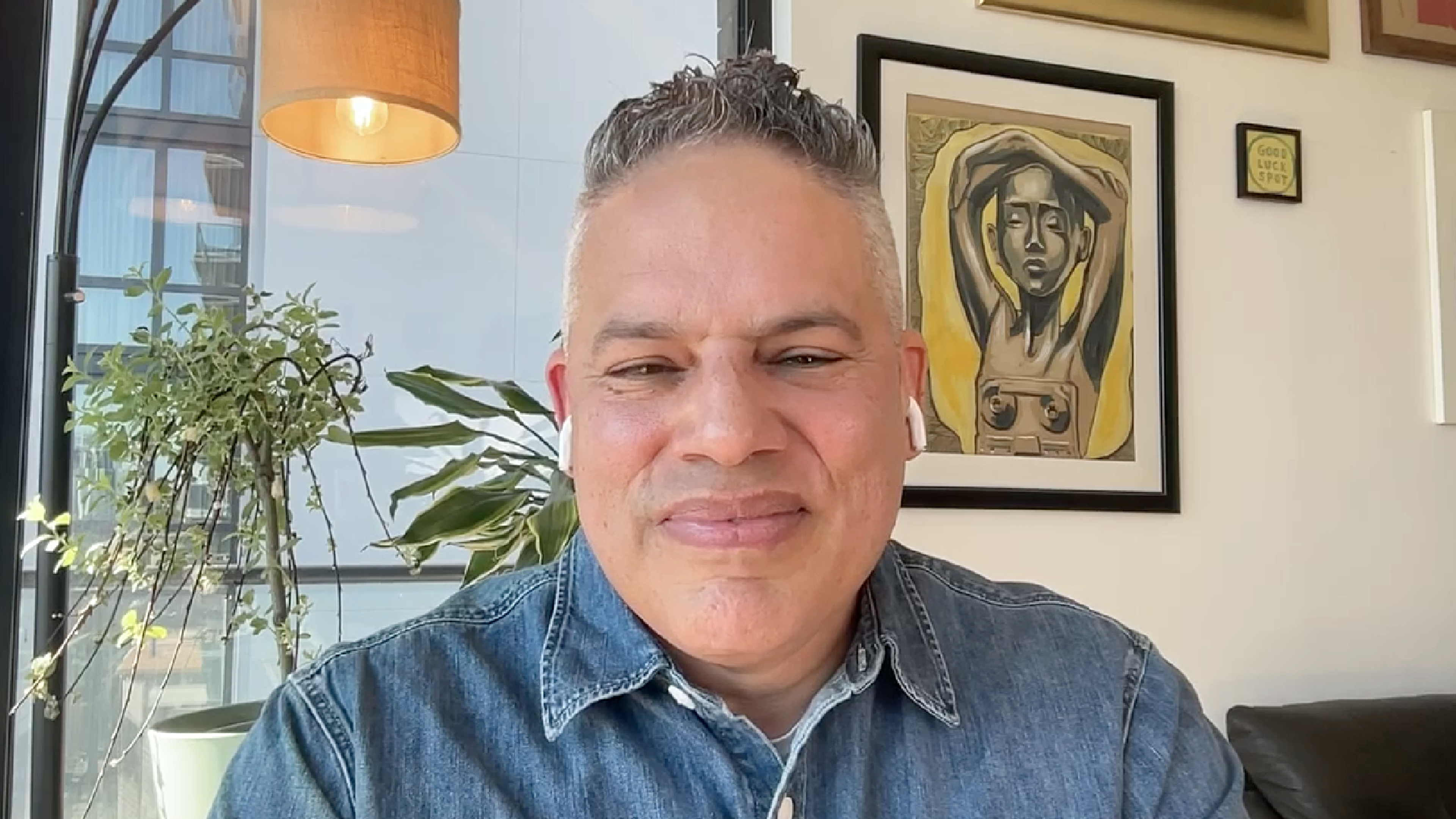

Vazquez was a founding board member for the Keith Haring Foundation for 35 years and ran it from July of 2019 until May of 2025, but there was no institutional polish to the story he told, no neat mythology, no sense of someone repeating a line he has been asked to deliver a hundred times before. What came through instead was something rarer: proximity. Not proximity to a brand or an estate or an art-historical idea, but to a person. To a studio. To a world. And then, over time, to the strange and weighty responsibility of helping that world continue without flattening it into something overly fixed, overly managed, or overly safe.
Vazquez did not enter the art world in the conventional way. He did not come through academia, or museums, or any of the formal structures we tend to associate with cultural authority. He came into it young, almost by accident, through downtown New York in 1988. He was 17, fresh out of high school, working in a T-shirt shop, a self-described uptown kid with a good vantage point on the coolest neighbourhood in the city and no real sense yet of what his life would become.
That detail matters, because so much of what makes his story powerful is that it begins without strategy. He was not trying to build a career in art. He was a young DJ, not yet professional, already shaped by music and by the visual intensity of New York, but not yet inside the machinery of the art world. Downtown, as he describes it, felt like another planet. There were artists, punks, club kids, people making things in public that did not immediately explain themselves. One man rolled a steel drum filled with purple paint through the neighbourhood, leaving footprints behind him. Someone tiled lamp posts with broken fragments. There was experimentation everywhere, but also something more than that: a sense that self-expression did not need permission.
That, perhaps, was the first education.
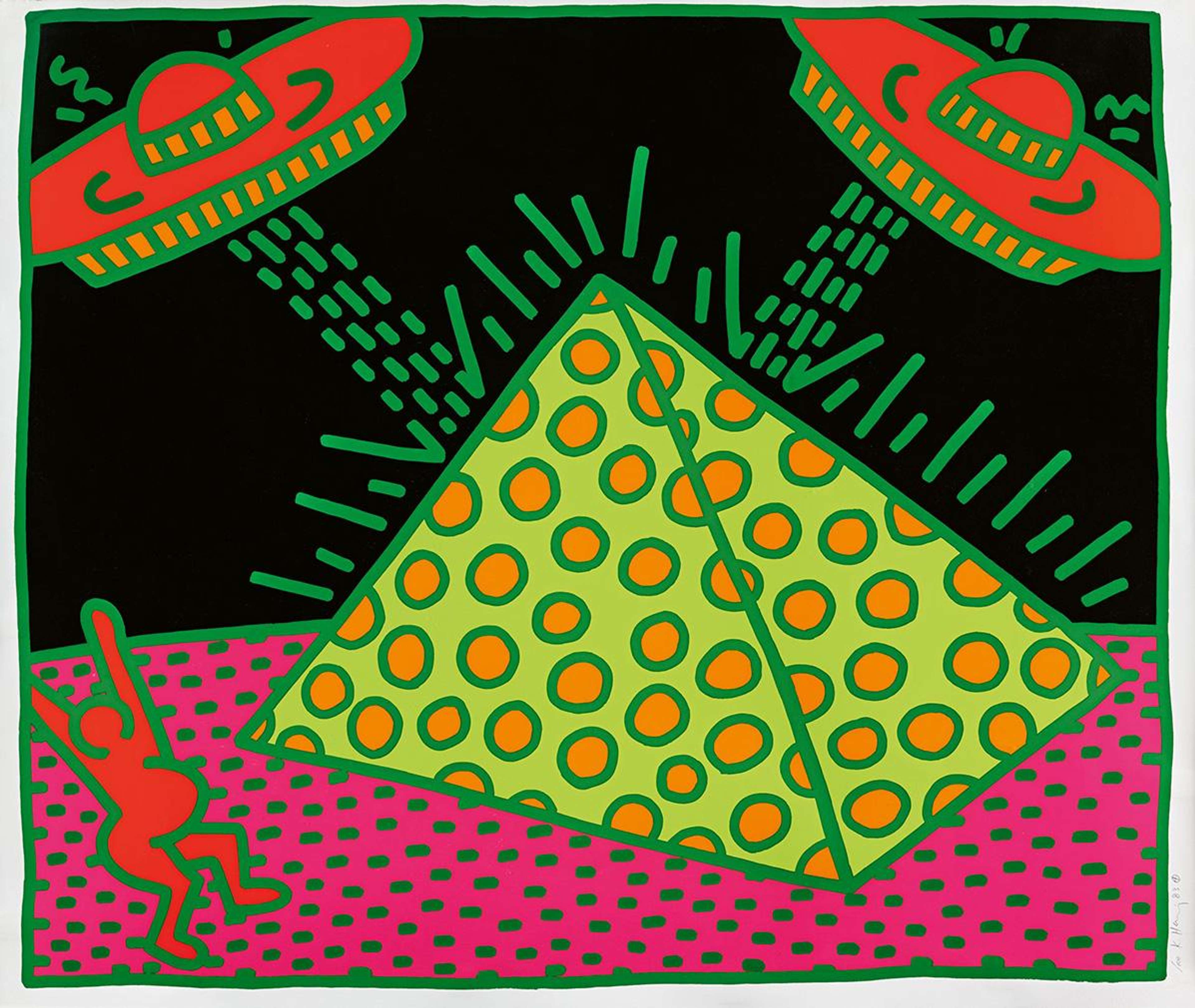
First Encounters With Keith Haring
When Vazquez speaks about downtown culture, he makes a distinction that feels especially useful now. The difference, he says, was style versus fashion. Fashion was what you could buy. Style was expression. It was how you carried yourself, how you moved through the world, what you listened to, how you refused to conform. That culture, in his telling, was not yet segmented into neat tribes. Punk and hip hop still brushed up against one another. House and rap still lived in the same rooms. Artists, DJs, promoters and outsiders were all shaping the same ecosystem. It was porous, alive, and not yet fully categorised.
In that world walked Keith Haring.
Or rather, into that world Vazquez first saw him, outside his studio, already recognisable, already famous. But the real meeting came soon after, when Haring walked into the T-shirt shop asking for someone he knew. Only later did Vazquez discover that it had not been random at all: Haring’s studio assistant had sent him in after spotting a boy he thought Haring should meet.
The first visit to the studio left a permanent mark. Vazquez describes it as a cathedral, and it is hard to improve on that. High ceilings, a skylight, paintings on the wall, blank canvases waiting to be used, drawings on the floor, boxes of T-shirts, people moving back and forth, phones ringing. It was active, serious, alive. Haring himself, though, was quieter. Not passive, not withdrawn, but quietly in command of the room. Vazquez remembers watching him hammer coloured tacks and nails into a wooden portrait of the Mona Lisa, with almost no frame of reference for what he was seeing. At that point, his knowledge of art was limited. He knew Haring through the subway drawings, through MTV, through the Adidas connection with Run DMC. He could feel the significance of what he was witnessing, but he could not yet name it.
That innocence turns out to have mattered. Vazquez believes Haring enjoyed seeing things through his eyes - the eyes of someone encountering this world for the first time, without jargon, without hierarchy, without the deadening effect of over-explanation. It meant that what landed first was not the market, or the institutional significance, or even the iconography. It was the man. Haring’s openness. His warmth. His seriousness. The sense that the work came from a place of generosity.
This, for me, was one of the most affecting parts of the conversation. We often talk about artists in terms of output, influence, valuation, exhibitions, market reception. We talk about the work, and then we build systems around the work. But what Vazquez kept returning to was the force of Haring’s character, not as sentiment, but as source. The imagery mattered, of course. The visual language was extraordinary. But what made it carry such charge was the thought behind it. The activism. The insistence that art could move through the world in public, not just in privileged spaces. The belief that access was not dilution, but purpose.
Graffiti, The Subway Drawings & Pop Shop
That belief is perhaps clearest in the subway drawings, which Haring had stopped making by the time Vazquez met him, but which still sit at the centre of any discussion about access, authorship and public art. Vazquez’s explanation of them was one of the sharpest I’ve heard. To native New Yorkers, those empty black advertising panels in the subway were invisible. Dead space. Something to walk past. Haring, as an outsider, saw possibility. He bought chalk upstairs at a newsstand, came back down, and started drawing. The surface was perfect for it. The subway became a laboratory: a place to work out his language quickly, urgently, under pressure.
But Vazquez is clear that this was not simply an act of altruism. It was also about visibility. In the language of graffiti, it was about “getting up,” about being “all city.” Haring was not a graffiti writer, but he understood the logic of presence. He understood what it meant to be seen everywhere. So the subway drawings did two things at once: they gave art to the public, and they built a new kind of public recognition. Generosity and ambition sat side by side. That feels important, because too often we try to flatten artists into saints or cynics. Haring appears to have been neither. He was strategic without being closed, populist without being simplistic, commercially aware without surrendering the core of what made the work radical. That radicalism, of course, did not end with the subway. It evolved.
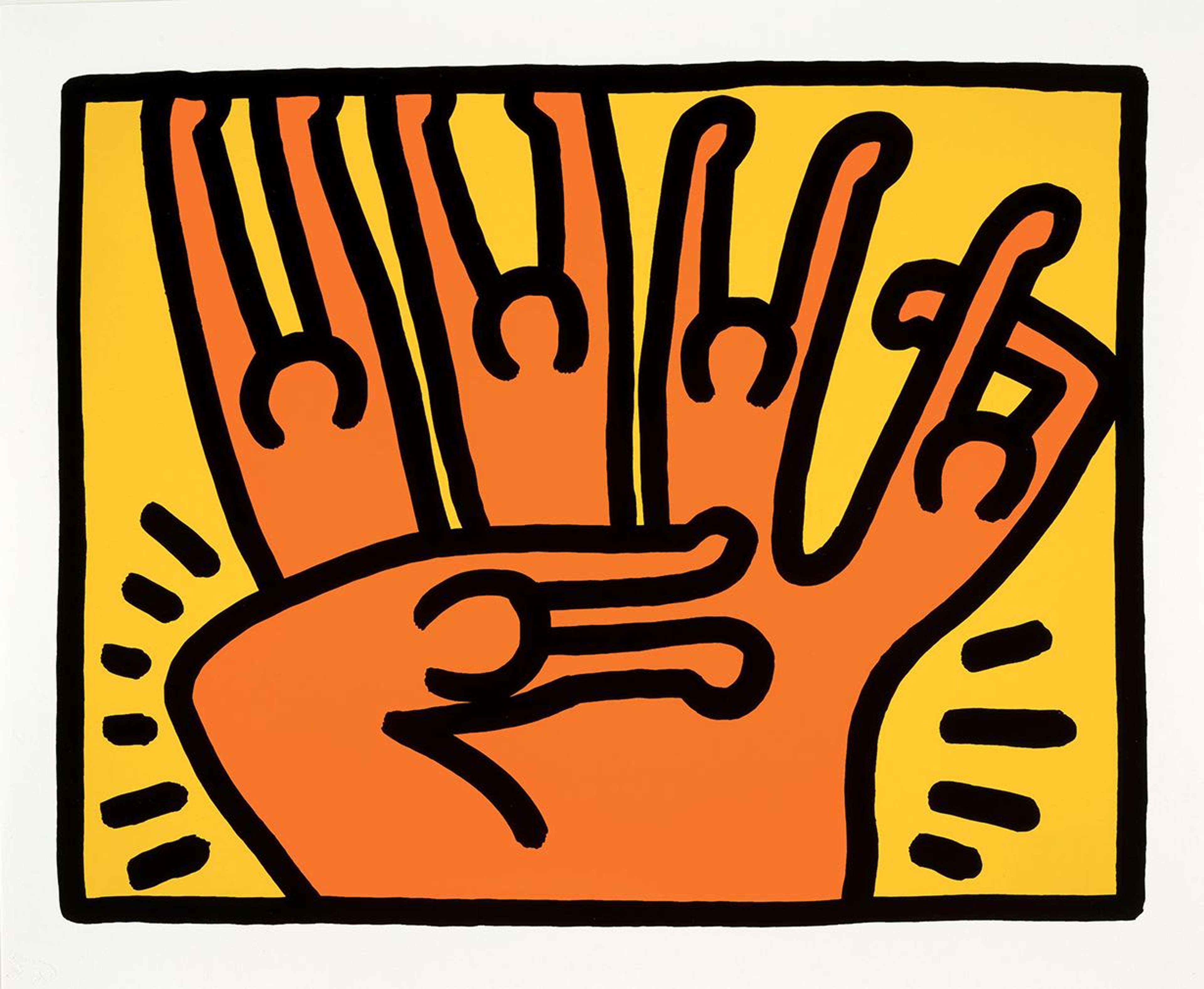
The Pop Shop is now easy to understand as part of the Haring mythology, but Vazquez reminds us how shocking it was at the time. The art world was still deeply invested in scarcity and hierarchy. To take imagery associated with high-value paintings and place it on a $25 T-shirt was not a branding exercise in the way we now lazily assume. It was a provocation. It challenged assumptions about who art was for, what counted as serious, and whether access necessarily cheapened meaning. Dealers hated it. The establishment did not know what to do with it. But Haring understood something before many of his peers did: if the subway drawings were no longer viable as a free public gesture, another route had to be found. The shop was that route.
Preserving Haring's Legacy
Where the conversation became especially compelling was in its refusal to make any of this simplistic. Vazquez does not romanticise scale. He understands the tension that comes with it. He understands, too, that once imagery travels far enough, it enters worlds the artist cannot fully control. Haring was deeply aware of that. He thought seriously about licensing, about stewardship, about misuse. He used Halston as a cautionary tale - not because commercial expansion was inherently wrong, but because careless expansion could hollow out a name. Haring understood that the management of his imagery would matter enormously after his death, perhaps even more than the sale of individual works. He knew the work would live on. The question was how.
That question became Vazquez’s to live with. What does it mean to carry forward the legacy of someone who died young? Not just preserve it, but carry it. Not embalming it, but keeping its radical spirit alive.
His answer was disarmingly direct. Haring had already set the blueprint. The radicalism was not something that needed to be invented after the fact. It was there in the structure he left behind. Support organisations housing gay teenagers who have been thrown out of their homes. Fund communities dealing with HIV/AIDS. Put money where the values were. Keep generosity active, rather than symbolic. That, Vazquez argued, is one of the truest ways to continue Haring’s work.
It was one of the moments in the conversation that landed hardest with me, because it cut through a lot of the usual art-world noise. Legacy is often discussed in abstract terms: influence, significance, posterity, canon. Vazquez brought it back to something more grounded and more difficult. Legacy is also logistical. Financial. Moral. It requires decisions. It requires care. It requires people willing to think about what the artist wanted, what they feared, what they might have become, and what the present now demands.
He spoke candidly about that tension too: the impossible question of whether one is protecting the wishes of Keith at 31, or imagining the decisions Keith might have made at 66. There is no perfect answer. There cannot be. Haring did not get to grow old into new conditions. He did not get to respond to social media, or oversupply, or the flattening effects of mass cultural circulation. He left a framework, not a script.
Still, some things seem clear. He believed in access. He believed in public life. He believed that art should not be sealed off from the people it might move. He believed in using visibility for good. And he believed, perhaps most importantly, that generosity was not secondary to the work. It was part of it.
By the end of our conversation, what stayed with me most was not just Vazquez’s knowledge, though that is considerable, nor even the rare vantage point he offers on Haring’s life. It was the steadiness of his devotion. Not sentimental, not performative, but deeply felt. He spoke of Haring as someone who changed his life, educated him, widened his vision, and modelled a way of living with purpose, creativity and courage. There was gratitude there, but also conviction. The sense that some people alter the course of your life so completely that repaying them becomes impossible, and so the only thing left is to keep speaking their name properly.
Nearly 40 years on, Haring’s work still moves in ways few artists’ work does. It lives in museums and books, in public memory and private collections, on clothing, in charity, in children’s drawings, in the language of artists who came after him. It lives because the imagery was strong. But it also lives because the values behind it were stronger.
That is the part Gil Vazquez helped me understand more clearly.
Not just how an artist becomes iconic, but how a life, if held carefully enough, can keep giving long after it is gone.